
adrienne maree brown on how culture makes change possible
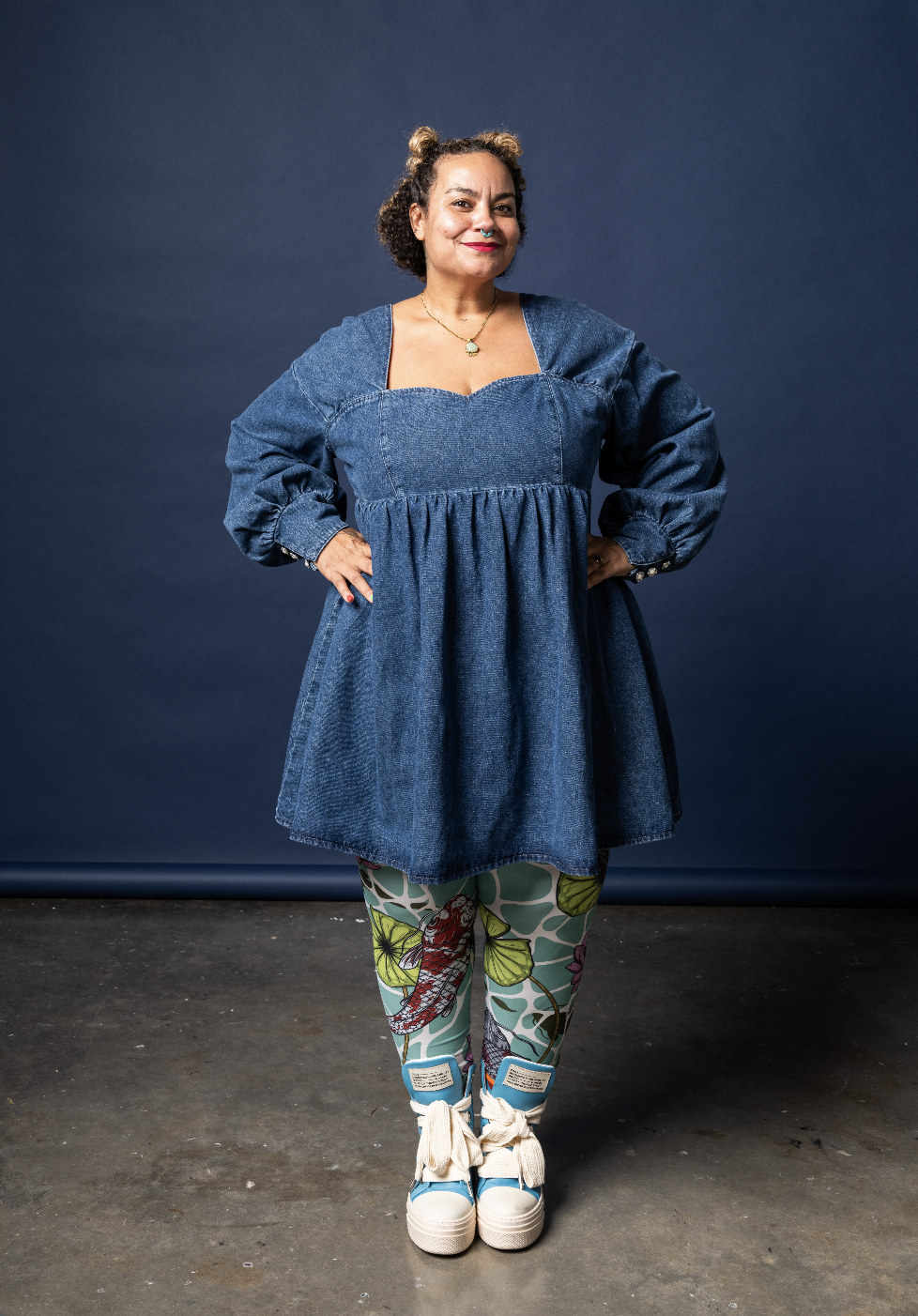
adrienne maree brown
“Culture is where we collectively decide what is normal, what is exciting, whom we include and whose stories we can tell. Policy follows.”
In The Shift, UN Live speaks with leading thinkers about how music, art, media and everyday cultural spaces—from stadiums to dinner tables—can become stages for connection, empathy and collective action.
adrienne maree brown believes that change is fractal: the patterns we practise in ourselves, our relationships and our communities shape the cultures and systems we create. Culture allows those patterns to travel, turning individual acts into shared stories and new ways of living.
In this Q&A UN Live’s Head of Communications, Annesofie Norn speaks with the New York Times-bestselling author and influential thinker behind the book Emergent Strategy about how culture can challenge hierarchy, expand our collective imagination, and help us practise the future. Culture gives us a space to make alternative ways of living visible, tangible and shareable before they become political or systemic realities.
This interview has been edited and condensed for clarity and narrative flow. Some questions and responses have been revised while preserving their original meaning.
Annesofie Norn: At UN Live, we work with music, art, film, sports, storytelling and global cultural platforms to create cultural experiences that can shift the way people see and act in the world. Popular culture does more than reflect society; it helps shape what we collectively accept as normal, desirable and possible. How do you understand its role in social transformation?
adrienne maree brown: I think culture is where we collectively decide about things, and policy follows. Policy moves back and forth, but culture is where we decide what is normal, what is exciting, what we are going to include and whose story we can tell.
It is very important that we pay attention to what is happening in mass culture. I watch all the reality shows about love because I am fascinated by what people are learning about love. What are the new assumptions? What are people exploring and talking about? You all might try to put queerness back in a box or put transness back behind some line, but it is too late. In the mass culture, too many people have liberated themselves, and they are not going to go back.
I think about how Palestinian solidarity has grown around the globe and how much of that has been cultural: artists stepping forward and saying, “I stand with this place.” And people like Ms. Rachel saying, “I am a children’s teacher, educator and entertainer—that is what I do—but I am going to use that cultural space to talk about loving Palestinian children and the children in immigration detention centres.”
Anyone can use those spaces to say: “Wait. What they are saying culturally, we do not have to take that on. We can reject it and practise something else here.” We can wait for policies to catch up with us, but in the meantime, we can go ahead and practise the culture we want to live in.
Annesofie Norn: In your book Emergent Strategy: Shaping Change, Changing Worlds, you write that change is "fractal" and argue that the patterns we practise in our everyday lives are reflected in our organisations, communities and societies. How do small shifts in the way we relate to one another become wider cultural or systemic change?
adrienne maree brown: Every time I think about this, I come back to what people are willing to do on a daily basis and in their actual relationships. People can talk to each other about these things, but what are you practising within yourself?
The fractal piece really matters here because there is always urgency happening somewhere. What people do there, if the story gets told, becomes a seed that helps other people when their time comes.
Annesofie Norn: Is that where culture becomes essential? Because it allows a different pattern practised in one relationship, community or movement to be seen, shared and adapted elsewhere, so that small acts of living differently can gradually grow into wider cultural and systemic change?
adrienne maree brown: Yes, over the past 10 or 15 years, I have watched this play out at Standing Rock, in the resistance in Palestine, the uprisings in Ukraine, Black Lives Matter, Me Too and the Gisèle Pelicot case in France. If you look, you can see a pattern.
Each of these patterns is playing out because more than one person in each place was willing to do something different: “I am willing to resist my erasure, and I am willing to tell the story.”
Annesofie Norn: If transformation begins with what people practise, it must also begin with what people can imagine. How to create the vision of a future that people can believe in, and fall in love with?
adrienne maree brown: We are constantly looking backwards and forwards. I think some people are more oriented towards looking back, while others are more oriented towards looking forward. A society functions when we are able to strike a good balance: What is the best that our ancestors left us, and what is the best of what we could create together moving forward?
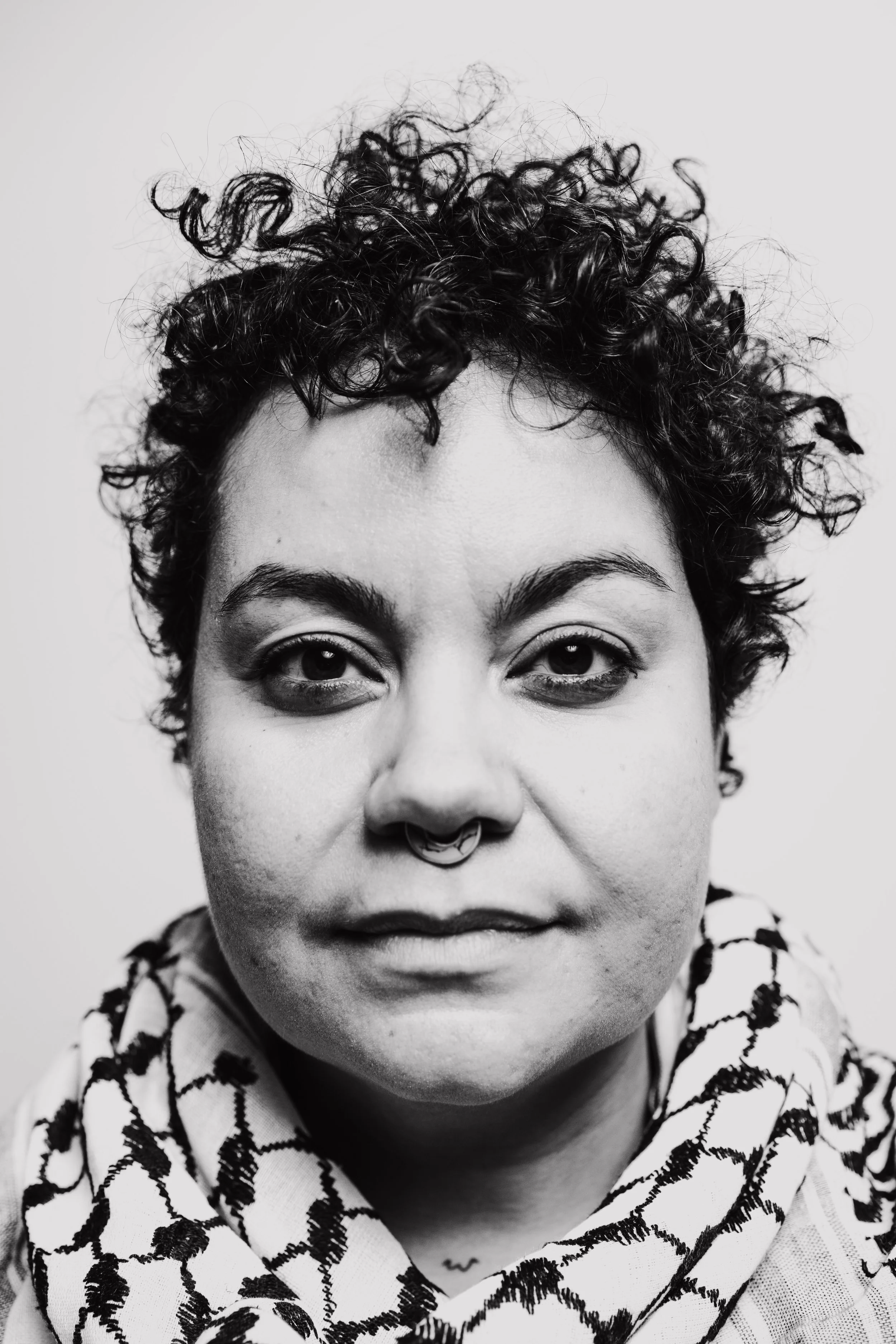
“One hopeful orientation towards the future is recognising that there are things in our past that we would never do again.”
When will we be able to look back at this time and see genocide as something firmly in the past? It gives me hope to imagine a future in which genocide is seen as antique, or even capitalism as a rudimentary economic form that humans had to move through on the way to something more communal and less destructive.
Humans have always imagined what comes next before building it. That is part of how we evolve. Gloria Anzaldúa [a Chicana feminist writer and queer theorist] said that, in order to create something, we first have to imagine it. That is how we have always done it.
You build something in your mind, and imagination itself is neither good nor bad. White supremacy was imagined. It is not real. Male supremacy is not real, so it too must have been imagined. What has been imagined can be challenged when it is no longer useful to us.
Right now, we need a great deal of collective imagination—to think of ourselves globally, to think of ourselves as one species on one planet. I want us to imagine ourselves as one more often.
Annesofie Norn: It feels essential, a return to the heart of the matter. This idea of separation is, among other things, what has allowed societies to believe that we have the right to conquer others and the natural world. At UN Live we have created a global platform called Global We, a network of repurposed shipping containers, where people can meet as equals across the world. To experience a sense of global belonging and seeing oneself as part of a wave of collective, global positive change is an important step towards shaping a hopeful future.
adrienne maree brown: Yes, exactly. It is hard for us to imagine that there are other people, other species and other lives that are just as important as ours. One of my favourite writers and thinkers, Octavia Butler, said that humanity’s fatal flaw is our commitment to hierarchy. We use our intelligence for the sake of hierarchy. The challenge is to let go of the idea that anyone is born better than anyone else.
Annesofie Norn: In Emergent Strategy, you show how patterns practised at the smallest scale can shape entire cultures and systems. If you could apply this thinking to the World Cup – one of the world’s largest cultural platforms – how might it help people experience themselves as part of one global we?
“One of the first things I would think about is ensuring that every city the World Cup comes to is left better than it was when FIFA arrived. There would be a practice of bringing the highest standards to how workers and the land are treated.”
FIFA would want the World Cup to be a global ambassador of fairness, righteousness, safety and wellbeing—and of growing the local economy. Workers would be able to attend every game, and there would be significant community engagement in how everything happened. Over the years, there has been a lot of controversy around the World Cup. As with anything, I would try to decouple it from some of its corporate overlords.
I would think about how the game could become accountable to place rather than to corporations. So much sponsorship is about selling things. Instead, each event would ask: How do we uplift the place where this is happening and uplift its people?
Education would be woven throughout. What is happening with Cabo Verde? What does it mean for this tiny island nation to come up against Spain or Uruguay? Cabo Verde was created in the tight bind of slavery. There is a way to tell that story that would be so exciting. By the end of the World Cup, people would have learnt so much about so many places—not only who the superstars are, but what each place and culture is about. What does it mean for a small place to come up against a large one? What is the colonial history?
The World Cup can be a great equaliser. It can be a place where it does not matter whether you come from poverty, hardship, struggle or an invisible community. You can break through if you have the gift and the persistence to activate it. It is quite moving. I find myself watching a lot more sports now.
Annesofie Norn: The World Cup gives us an extraordinary platform for practising change at scale. But what actually moves people to change when no such platform is present?
adrienne maree brown: Too often, it has to be a crisis that sparks change. But I have also seen people change through embodiment work, or in circles where people come together for collective healing and really hold ground for each other, to heal what is in their past and come out whole.
I see that happen at a small scale. I am curious about what it could look like at larger and larger scales, where people are given room—not only in a crisis—to become the kind of person who can be a good neighbour, a good community member, a leader and part of the network of care in their place and home.
I worry that too many of us will not do it until the crisis hits. A lot of my orientation has therefore been towards trying to wake people up. There is always a crisis unfolding somewhere that needs our attention. And change is always coming.
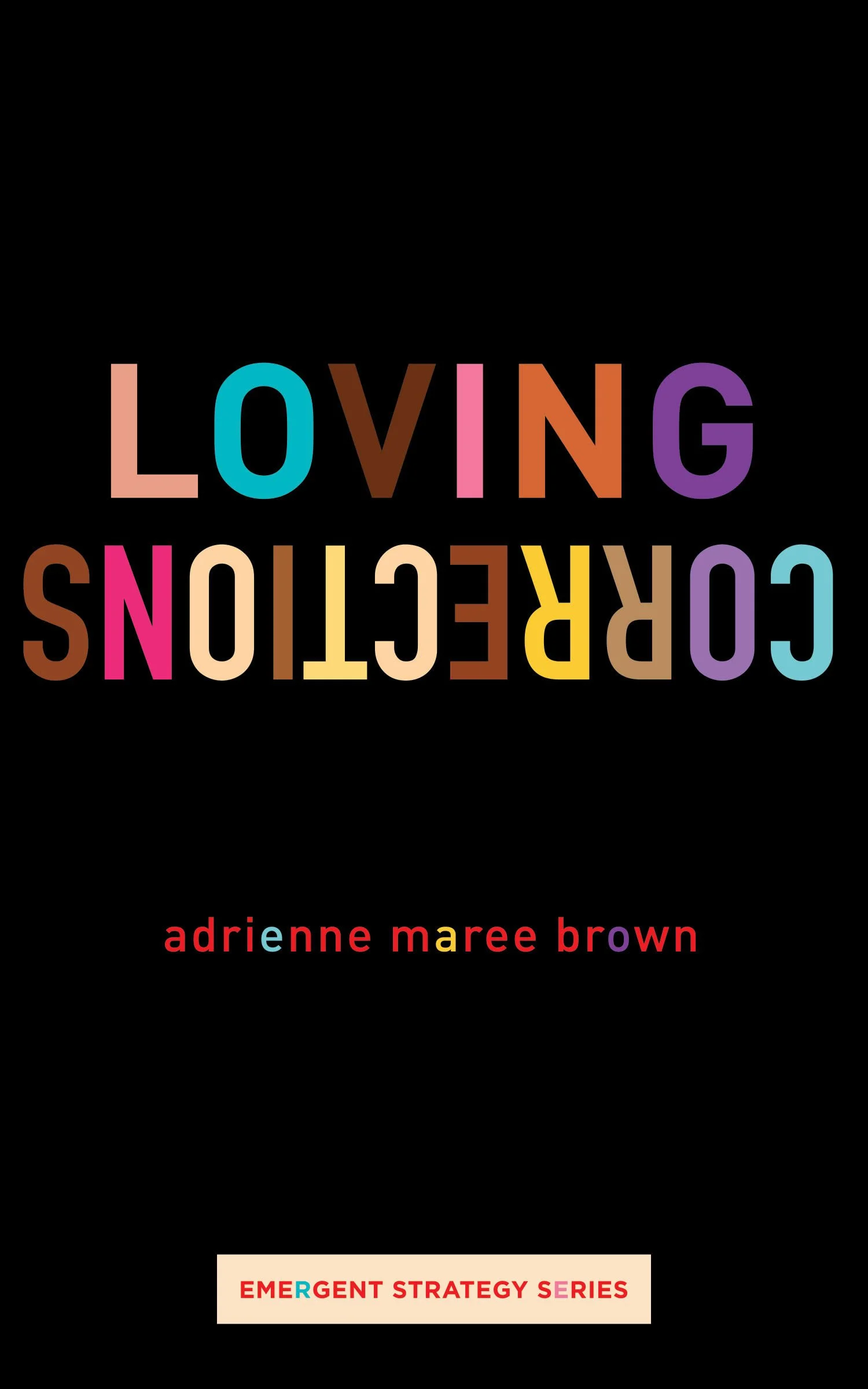
adrienne maree brown knows we need each other more than ever, and offers a practice for holding collective power, righting wrongs, and generating true belonging in her book Loving Corrections.
Annesofie Norn: In one of our earlier conversations in The Shift series, global climate leader Christiana Figueres described hope as a form of activism. What does hope ask of us when change feels difficult or impossible?
adrienne maree brown: I agree. A comrade of mine here in the US, Mariame Kaba, says, “Hope is a discipline.” I really appreciate that because hope can be hard to access when you are truly going through it.
I have to strengthen those muscles. I have to look around me. I cannot look only inside at the shadowy places; I have to look up, out and around me and see that life is going on. There is always a chance.
Annesofie Norn: We seem to be living through a period of political and cultural contraction—marked by authoritarianism, division and fear. How do we keep creating the conditions for expansion: for greater freedom, connection and belonging, and for more ways of being human to coexist?
adrienne maree brown: I think of it like the way the heart beats: it has to contract and then expand. Our consciousness is doing the same thing.
Right now, we are in a global trend towards fascism. I think of fascism and authoritarianism as a contraction of humanity’s soul and spirit. It says, “We will contract down.” If that were how things were meant to be, there would be no resistance.
Even in a state of war or attack, people are still human—still contracting and expanding, still capable of connection. Staying in touch with that humanity matters.
But after contraction comes expansion. That expansion can be gorgeous. I am ready for a moment of global awareness of how precious this planet is, and how gay it is, how Black and brown it is, how woman it is and how diverse it is—and how men can find a really beautiful place to exist within that cacophony of differences and ways of being. There are as many different ways to be a man as there are to be a frog, or anything else.
Annesofie Norn: That's a future many of us could fall in love with. What could it look like to practise that future in people's everyday lives?
adrienne maree brown: I can feel it all the time. And that is my job. I really feel that ancestors and spirits are constantly telling me, “It is not like that; it is like this.” I feel very grateful that my life is focused on how we create more possibilities for our lives.
Everybody can join me in this work, whatever your job is. You can ask: “How do I make more justice possible here?” If you are a banker, a newspaper designer, an Uber driver or a cook: How can I bring more love into this work? How can I make this a more humane and earthling experience?