
Kumi Naidoo on how popular culture transforms empathy into action for justice and climate
In The Shift, UN Live's thought leaders explore how music, art, media, and even everyday spaces—from stadiums to dinner tables—can become stages for more connection, inspired empathy, and collective action. In today's Q&A, Annesofie Norn, UN Live Lead Curator and Head of Communications, speaks with Kumi Naidoo, acclaimed global activist and former Secretary General of Amnesty International, on how popular culture can transform empathy into action, bridge divides, and unlock the courage needed to confront climate breakdown and rising inequality. Read along as he shares how cultural moments, from freedom songs to protest movements expand our imagination of what is possible and remind us that our liberation is bound up together.
It's time to rethink—and imagine the futures we want to create.
UN Live: From your perspective, where have you seen popular culture truly move hearts, shift narratives, and inspire collective action for the common good
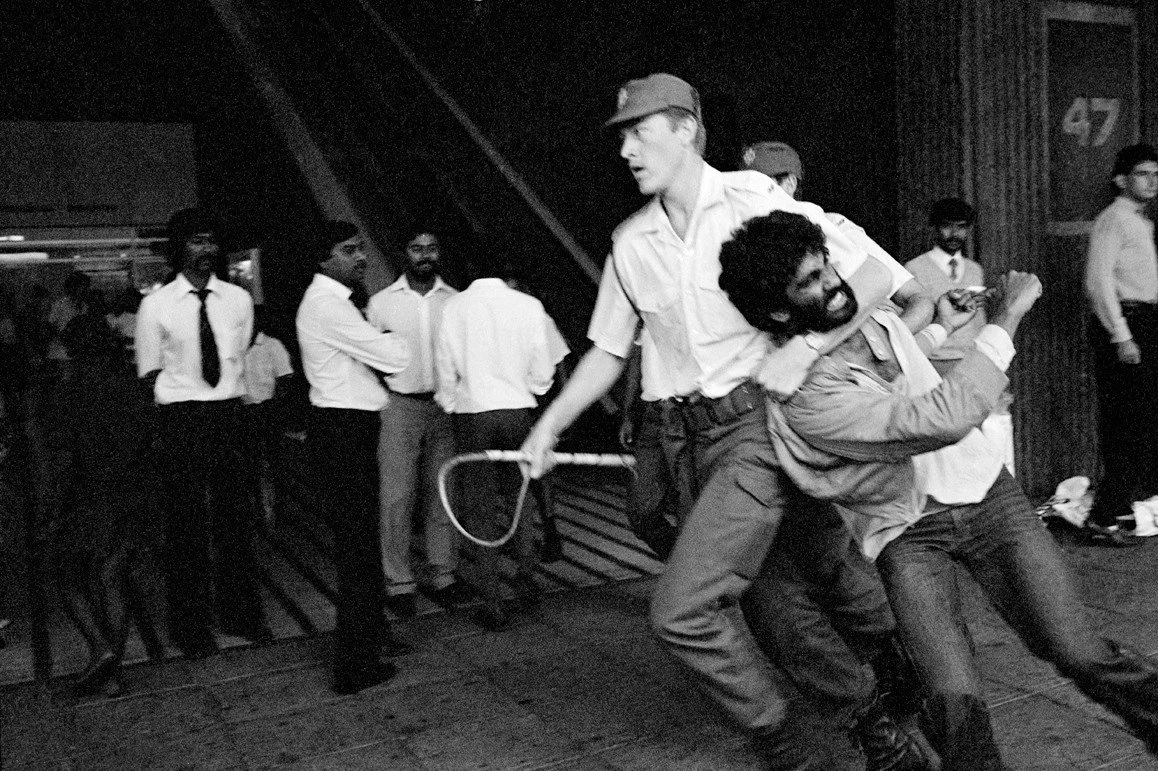
A photograph of Kumi Naidoo being arrested during the apartheid era
Kumi: Popular culture has always been a pulse of change. In the anti-apartheid struggle, songs like Asimbonanga by Johnny Clegg or chants in the streets carried courage into our bones. Globally, think of Bob Dylan, Fela Kuti, or Nina Simone — their music wasn't just entertainment, it was a call to conscience. More recently, films like Black Panther gave millions a vision of African dignity and creativity unshackled from stereotypes. These cultural moments expand the imagination of what is possible, and once imagination shifts, so too can the politics.
UN Live: You have spent your life fighting for justice and dignity. How do you think popular culture can transform empathy into action – especially when the challenges we face are so overwhelming: climate breakdown, rising inequality, conflict?
Kumi: Empathy is the spark; action is the fire. Culture can bridge that gap by turning feeling into a shared rhythm. When Beyoncé sings about injustice, or when a Netflix series highlights climate refugees, people don't just learn with their minds — they feel it in their hearts. But empathy alone risks paralysis in the face of overwhelming crises. What culture can do is remind us that we are not alone. It creates a chorus, not a solo. Once people feel part of something bigger, courage grows, and action follows.
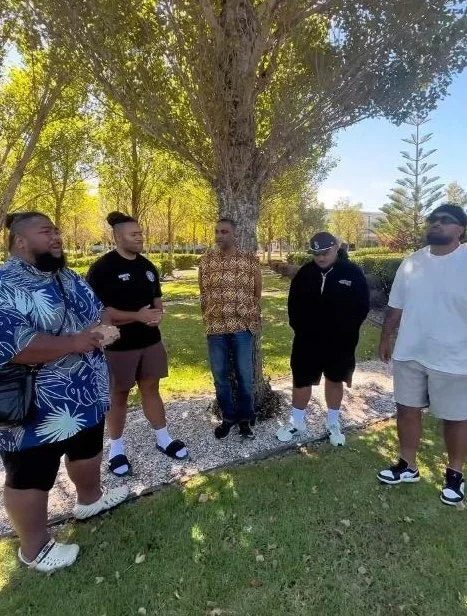
Kumi Naidoo singing with Pacific Artists for Climate Justice, This is our Home
UN Live: Is there a moment you recall when culture – a film, a song, a speech, a protest – changed the public mood, cracked open the status quo, and made new possibilities feel real?
Kumi: I remember the impact of the global “Live Aid” concerts in 1985. Though imperfect, they awakened a generation to famine in Ethiopia and showed the power of collective action across borders. Closer to home, the simple act of South African musicians refusing to play Sun City was pivotal in delegitimizing apartheid. In recent years, Greta Thunberg’s Fridays for Future movement used the cultural form of a school strike to reframe the climate crisis as a generational betrayal. These moments remind us that cultural expression can puncture denial and shift what is politically possible.
UN Live: You have stood at the heart of many global movements. How do you see film, music, sport, and even social media helping us feel our shared humanity, bridge divides, and imagine a better future together?
Kumi: Film and music let us step into other people's shoes, dissolving the artificial walls between us. Sport shows us that, despite borders, we can compete fiercely and still respect each other's dignity. And social media — for all its flaws — has enabled Vanessa Nakate, a young student in Uganda, to inspire millions across the world with her climate activism. These platforms, when used well, give us glimpses of our interconnectedness. They remind us that my liberation is bound up with yours, and that a future worth living in must be built together.
UN Live: You have been a voice for linking local struggles to global solidarity. Can you share moments where culture helped amplify those local voices, and made people see they were part of the same story?
Kumi: When South African freedom songs were sung in the streets of Berlin, London, and New York, they carried our struggle into the hearts of people who had never set foot in our townships. Similarly, when Indigenous communities in the Amazon sing their ancestral songs at climate summits, the world cannot look away. Culture translates the pain and hope of local struggles into universal language. It says: your fight is my fight too. It makes solidarity less of an idea and more of a lived, felt connection.
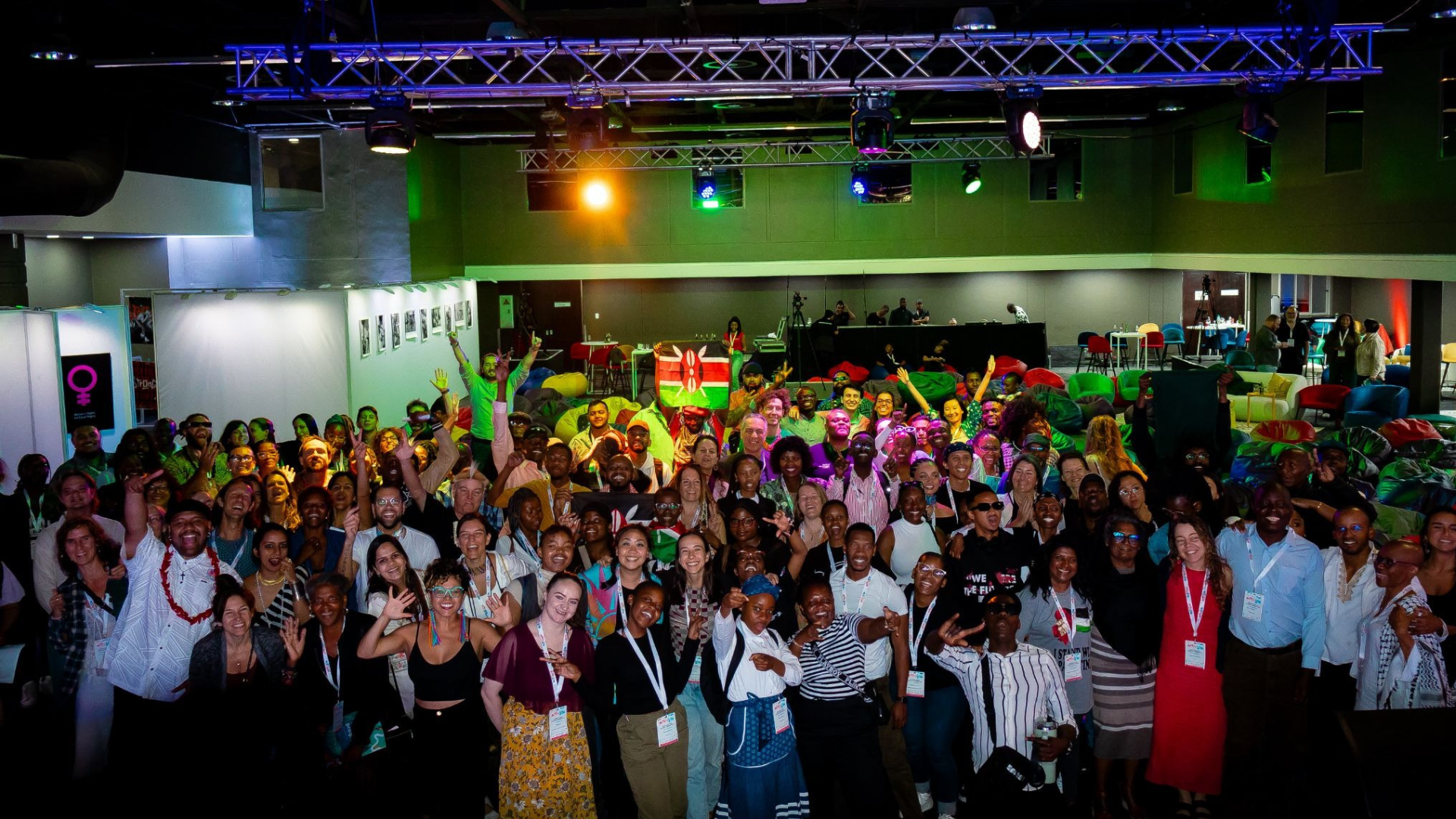
Inaugural Global Artivism Conference held Sept 5-8, 2024 in Pretoria, South Africa
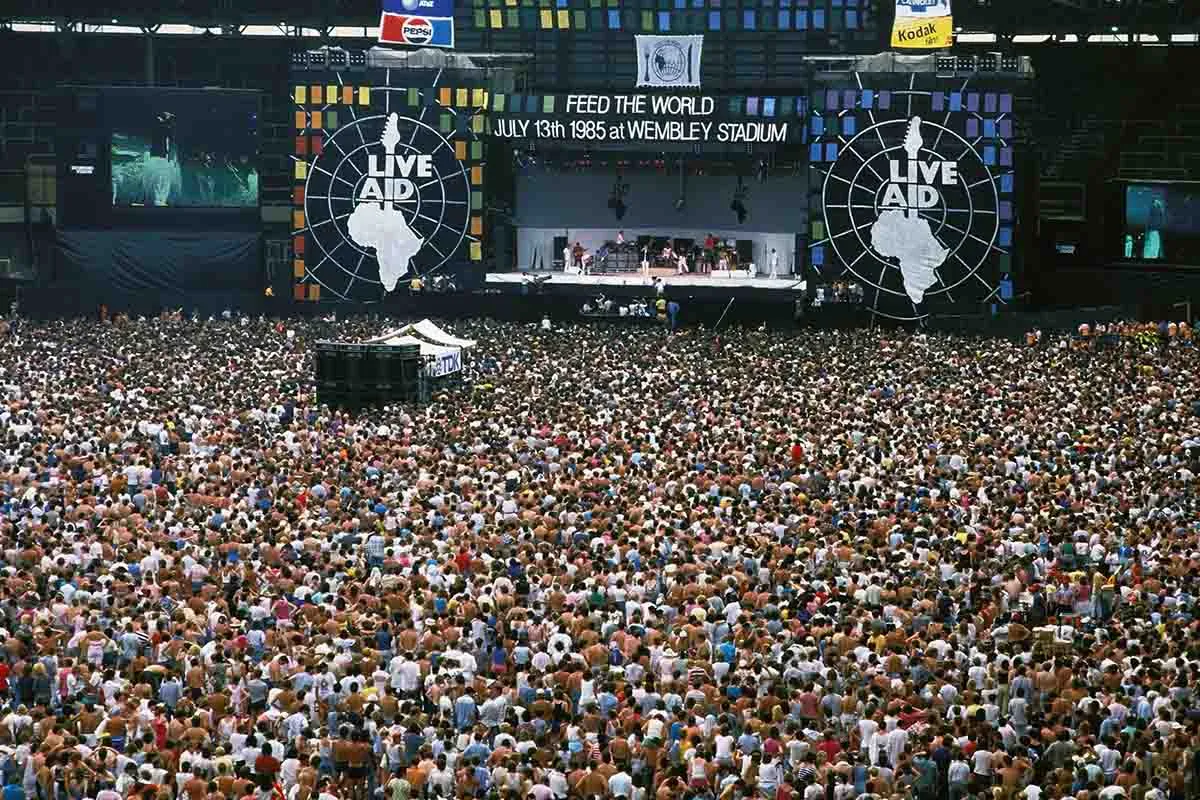
GBR: Live Aid for Africa at Wembley Stadium
LONDON - JULY 13: General view of the crowd during Live Aid in Wembley stadium 13 July 1985. (Photo by Georges De Keerle/Getty Images)
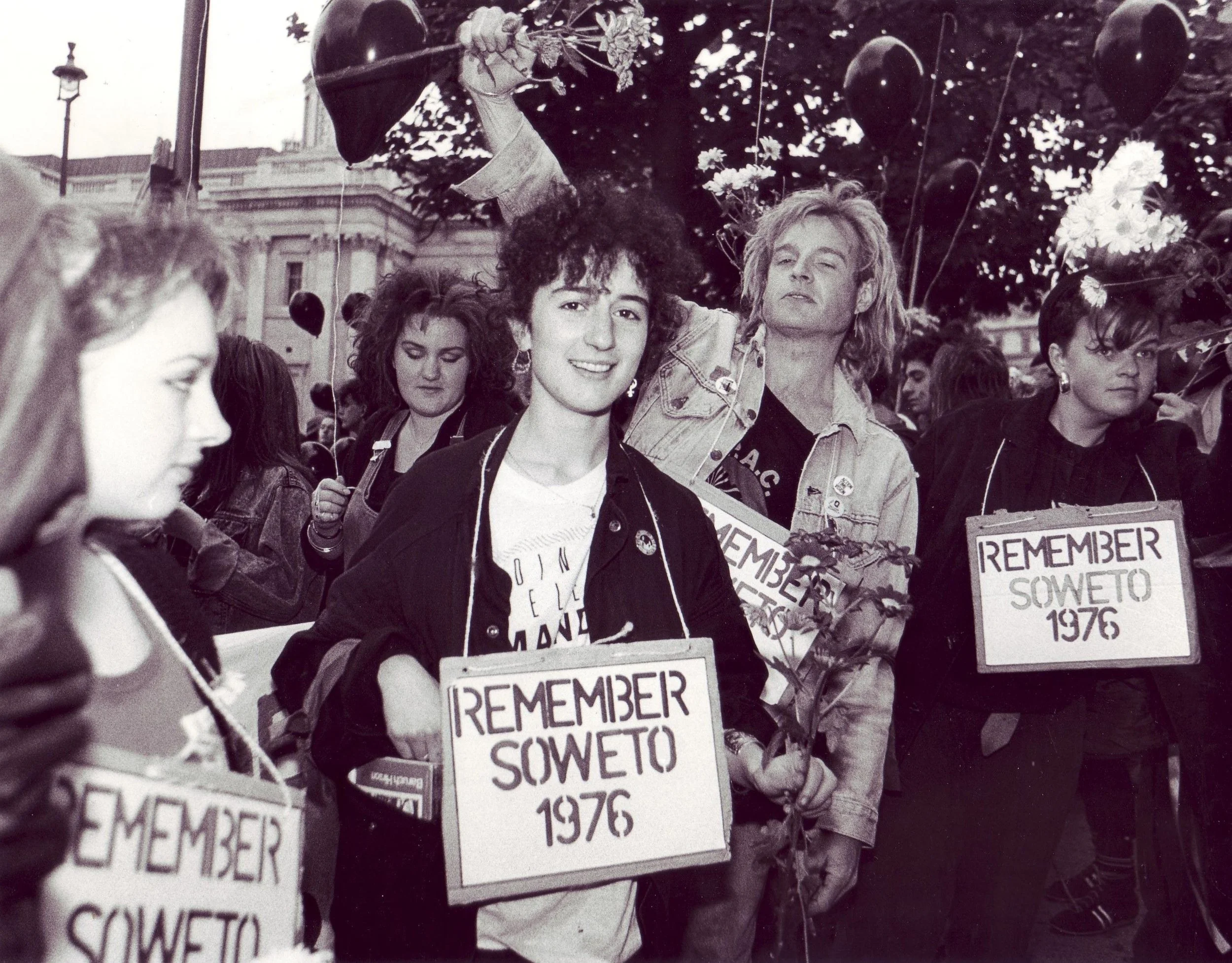
Anti-apartheid music UK South African protest songs 1980s (Photo from the Non-Stop Picket in June 1986, taken by Jon Kempster)
UN Live: You have always urged us to stay with the hard questions, even when they are uncomfortable. If you could offer the world one question to sit with – one that might unlock courage, compassion, and the will to act – what would it be?
Kumi: The question I would pose is: "What will our children say we valued more — the comfort of the present few, or the survival of the future many?" Sitting with that question forces us to confront uncomfortable truths about greed, inequality, and our addiction to fossil fuels. But it also invites us to rediscover compassion, courage, and community. If we really let this question penetrate our hearts, then action will follow naturally — not as charity or sacrifice, but as love made visible.
Kumi Naidoo - Amnesty Head: Climate Crisis Is a “Death Penalty” for Humanity. Leaders Need Political Will to Act
We extend our sincere gratitude to Kumi Naidoo for sharing his reflections and insights with us, guiding the conversation on how popular culture, from freedom songs to global movements, can transform empathy into action and remind us that our liberation is bound up together in the fight for justice, dignity, and a livable planet.