
By Louis VI
Special Edition · UN Day · 24 October 2036
This article was written for the special edition of The Global We Times under The Great River Revival.
It’s hard to believe now, but Rivers were once used as mere conveyor belts for our trash, our plastic and our raw sewage. Free extensions of our sewers. But our “out of sight out of mind” hypothesis led to the destruction of one of the most important habitats and sources of life on our planet. It led to the local extinction of Salmon, fresh water Dolphin species, and countless unique aquatic, semi-aquatic species as well as countless cases of severe destruction to plant and animal life alike. Our once blaisé attitude towards how we treat our rivers and by proxy our seas and oceans; created trash islands in the middle of the oceans, anoxic bays, plastics choking our waters and our more-than human cousins, microplastics choking our veins and outbreaks of disease from raw sewage. This was compounded by extreme water scarcity caused by the human induced climate crisis.
In response to the above, a majority of Global South nations have come together, led particularly by Waitukubuli (formerly known as Dominica), renowned for its sacred, clean rivers and waters. They are joined by the Māori in Aotearoa, First Nations Aboriginal Australians, the Caribbean Union, Bhutan, Congo, Romania, West Papua, Papua New Guinea, and the Indigenous nations of Amazonia, supported by the UIN (United Indigenous Nations).
Waitukubulians, even back in the 2020s, grew up thinking it is normal to be able to swim in a River and drink the waters at the same time, until they visited the rest of the world. In 2027, a youth-led movement decided to bring this to the global community as a minimum requirement for all Rivers. This quickly gained support, inspiring a global effort to not just clean our rivers, but give them rights. The measures prohibit agricultural runoff, mining, pollution, sewage or anything that can negatively affect the river or watershed within three- to four-square-mile radius of any river or watershed. This synced up with the adoption of GDR (Gross Domestic Regeneration) over GDP in the same year, and was ratified based on a combination of Kalinago (Indigenous nation of Waitukubuli), Maori, Aka (Congo) beliefs and the rights of nature.
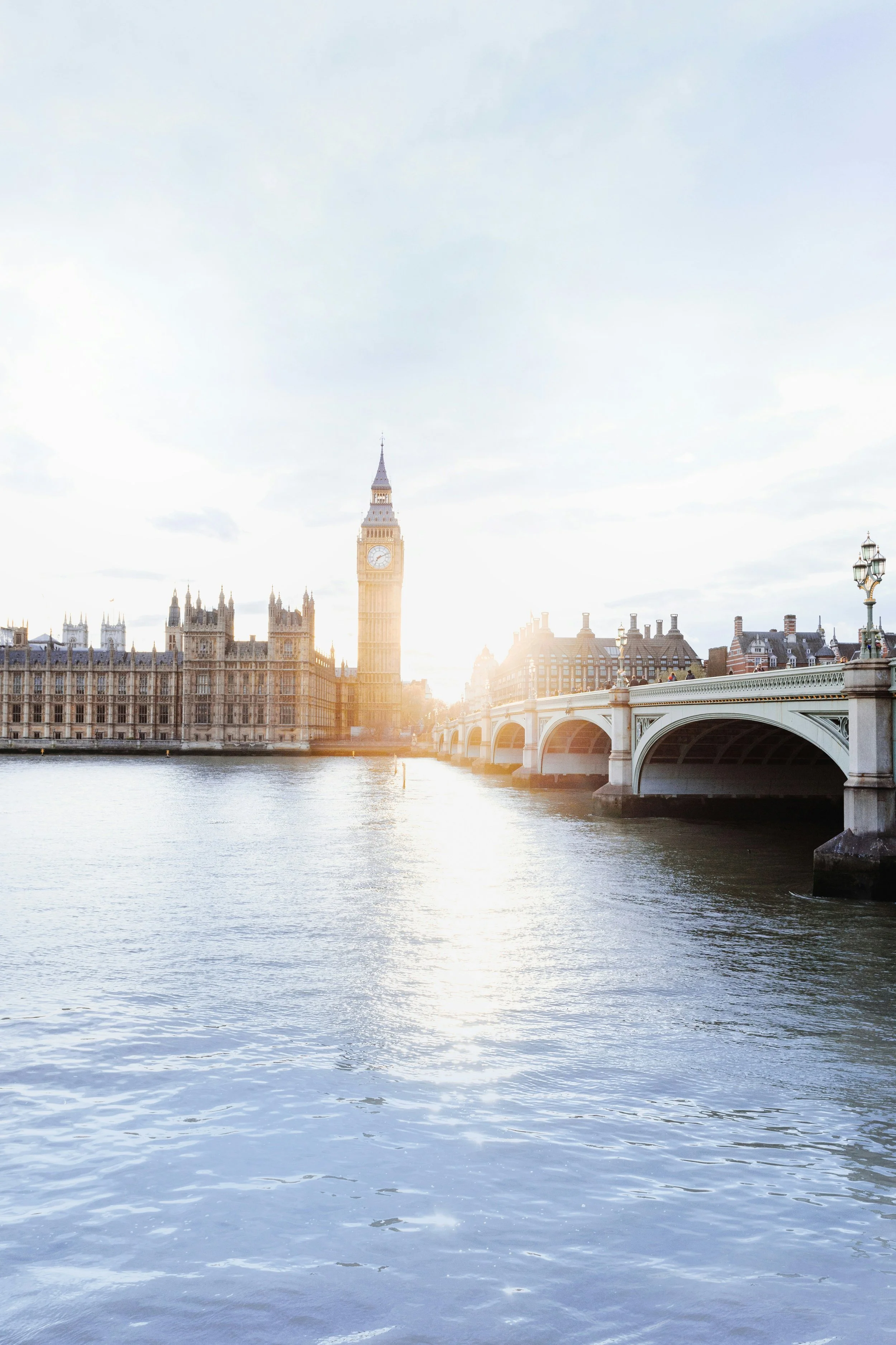
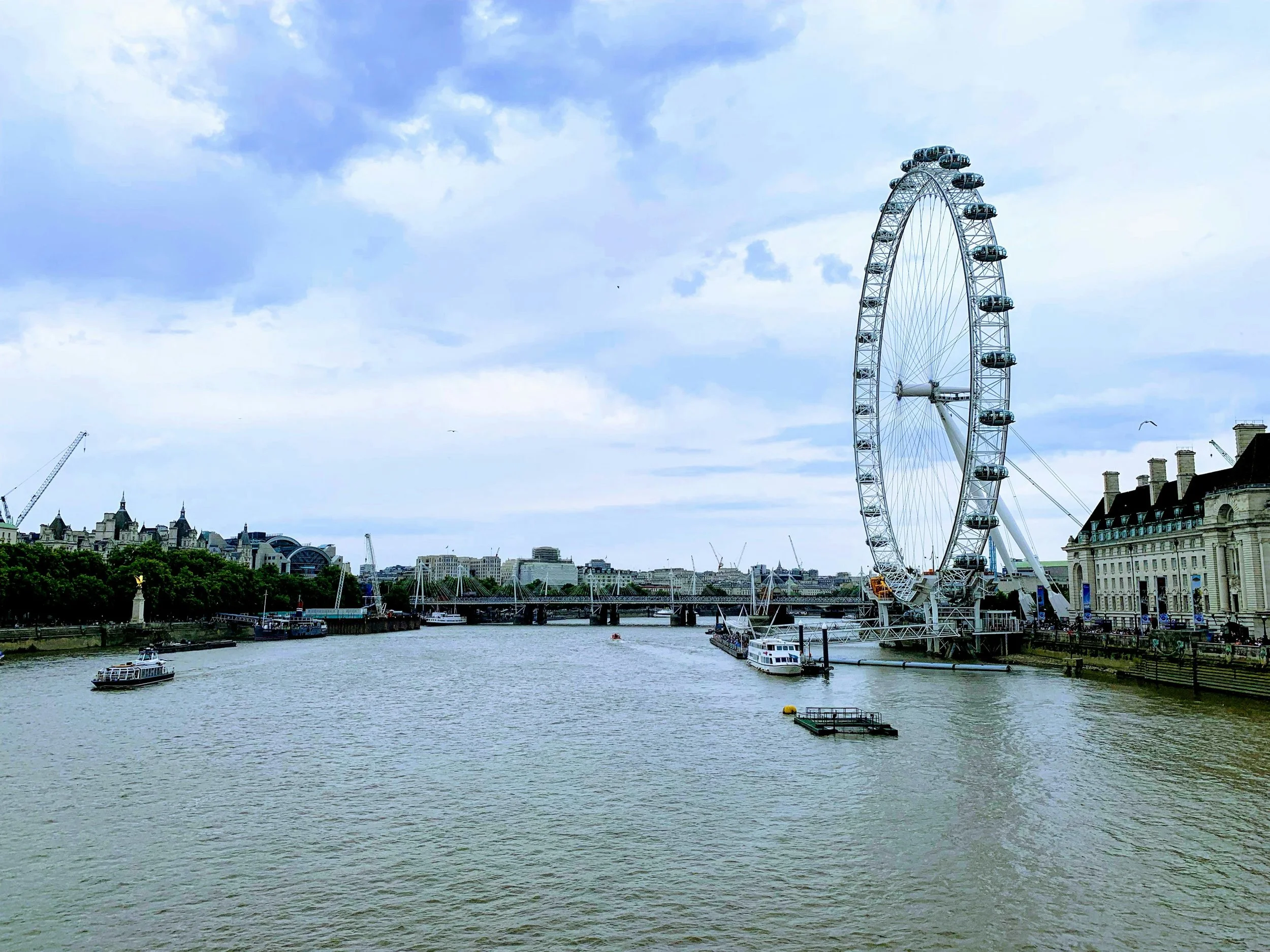
All of this gives weight and context to today’s exciting news: the last polluted river on Earth was declared fully safe to drink on 6 November 2027, after a year-long monitoring study that concluded that its ecosystem has been fully restored. The River Thames, located in Albion, formerly known as Britain, is now safe to drink. Obviously one of the greatest indirect effects was the extinction of the plastic water bottle.
Our societies once faced extreme water scarcity but as soon as more than 70% of rivers were safe enough to drink by 2030, private water companies became obsolete, and the re-nationalisation of water shortly followed with the ability to take drinking water directly from rivers with nothing but basic carbon filters.
It was once an unthinkable thing to imagine dipping your reusable water bottle in the Thames and taking a drink, and although, they still recommend filtering it through a least a bit of carbon, and doing it upstream from where the water becomes brackish, the drastic change of city designs worldwide, including London, meant that streets and buildings once lined with concrete are now forests of green. Some people alive today will remember the first buildings that were retrofitted with moss-seeded concrete, and soon the range of natural technologies we now know as the industry of Floratecture, turned even the greyest cities green.
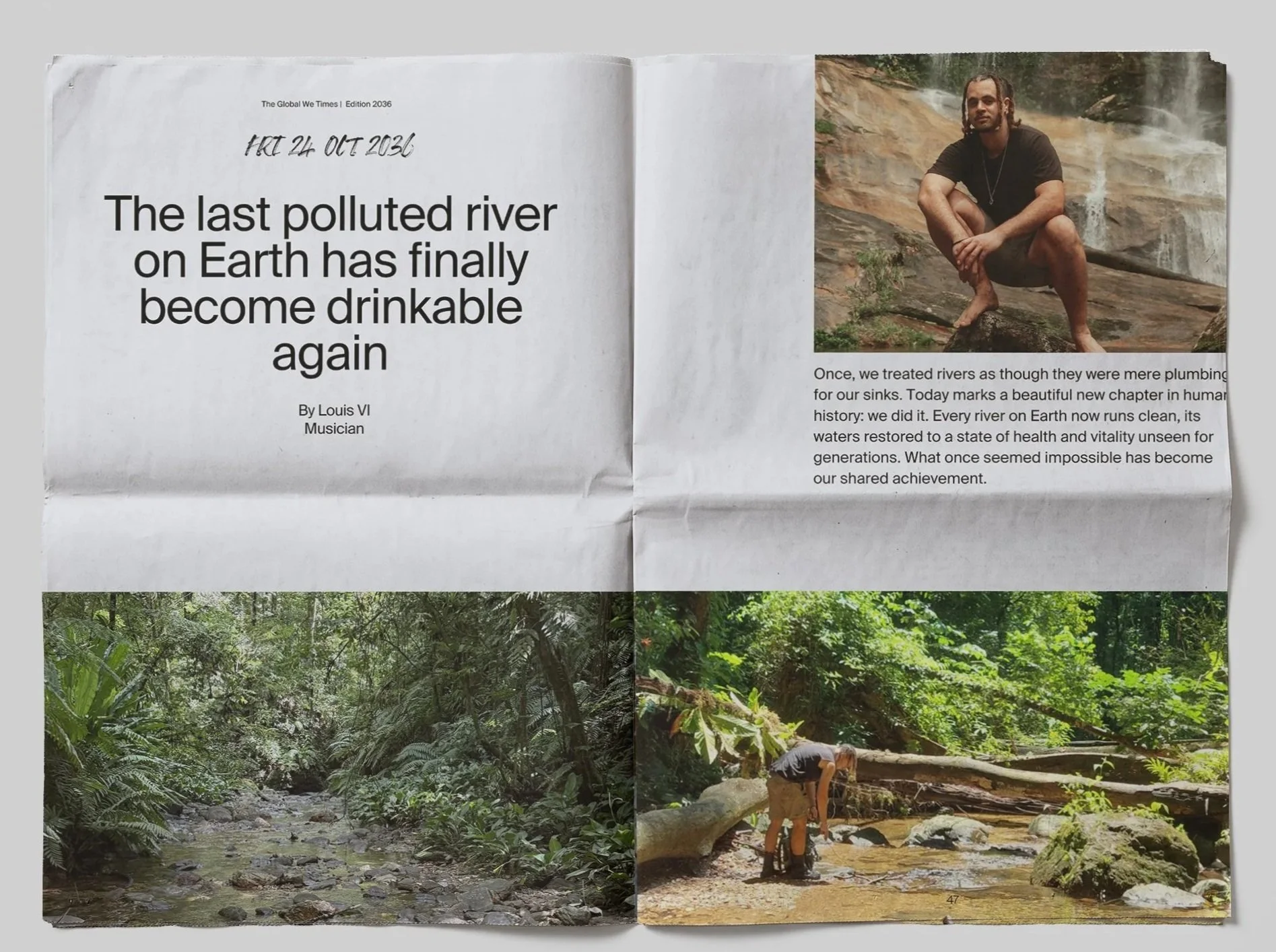
Louis VI’s headline for UN Live’s 10 year anniversary
The clean up of the Thames was arguably one of the most challenging projects in the world, as the hard concrete banks and old flood planes had to be broken to reduce the turbidity of the water. Now the Thames looks more like the Garonne River in Toulouse back in 2026: full of fish, lily pads, and reeds — but even cleaner. The key species that helped this happen were Beavers further upstream, which both trapped the sediment and slowed the water alongside extremely biodiverse flooded forests.
Both the return of Albion’s natural predators, the wolves and lynxes and their effect on the country’s rivers, helped restore the landscape. By changing the behaviour of deers and reducing their numbers, the predators allowed saplings along the riverbanks to recover. As the trees’ roots became established, they stabilised the soil and helped restore the Thames’s original meanders. The small amount of dirty water running off from the city is now captured by rain gardens, reeds, trees, plants, soil, rocks, and fungi along the riverbank.
To mark the return of the Thames, the Kalinago people, Maori, Aka, Papuans, Aboriginal Australians and other communities that first led the change have been invited to help conduct the Thames River’s first water ceremony in centuries, followed by a bath in the river with London’s diaspora, Young Pagan Society and the Mayor of London. The ceremony will take place on 20 June in Spring to match the Salmon run that’s now returned and is open to the public to attend or will be televised too.
Rivers carry the blood of our planet: water. They are the veins and arteries of the Earth. You wouldn’t put plastic, chemicals, or pollution into your own veins, so why did we put them into the planet’s?\
Once upon a time, in the recent past, we did. We treated these precious lifelines of our Earth as though they were mere plumbing for our sinks. But today marks a beautiful new chapter in human history: at last, we can say that we did it. Our rivers run as clean as they did 12,000 years ago and throughout all of their history before.