
Olafur Eliasson on art’s power to awaken connection with one another and the planet
Olafur Eliasson
In The Shift, UN Live speaks with leading thinkers about how music, art, media and everyday cultural spaces—from stadiums to dinner tables—can become stages for connection, empathy and collective action.
Olafur Eliasson believes that art can help us feel present: making us aware that we are not only observers of the world, but active participants in the spaces and realities we share. Through light, weather, breath and embodied experience, his work invites people to recognise their interdependence with one another and with the more-than-human world.
In this Q&A, UN Live’s Head of Communications, Annesofie Norn, speaks with the Icelandic-Danish artist and UN Live co-founder about how art can create conditions for connection, welcome different sensory experiences, and cultivate tenderness as a force for change. They discuss The weather project, the possibility of breathing together as a collective act, and why climate action must remain attentive to the histories of colonialism, exploitation and world views that no longer serve us and the planet.
UN Live: You co-founded UN Live to place culture at the heart of global transformation. Looking back, in what moments have you seen art and culture reshape how people sense their connection—to one another, to the world around them, and to the urgent challenges we all share?
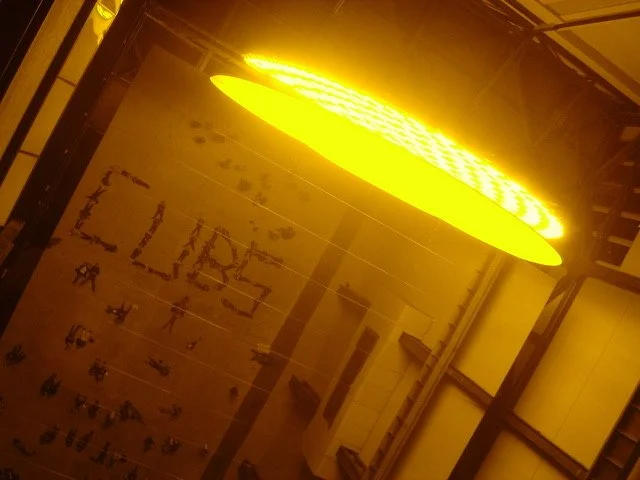
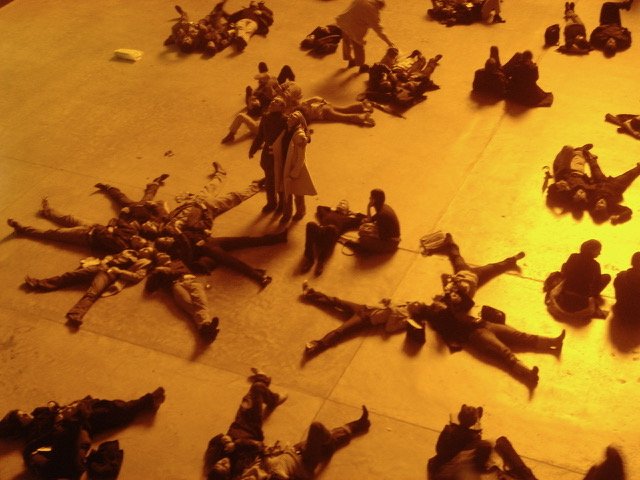
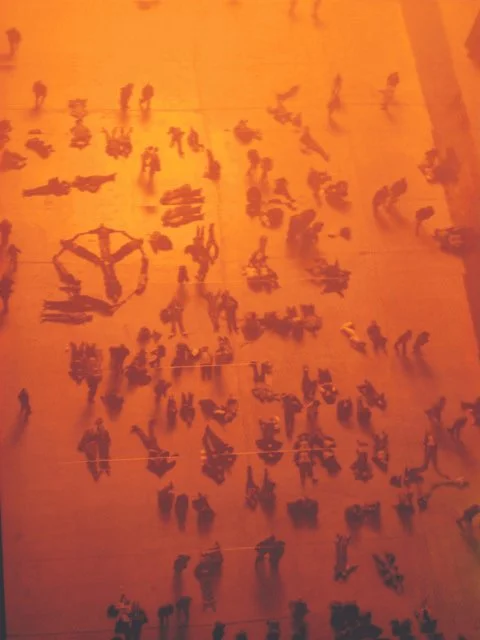
Olafur Eliasson: The weather project,my artwork at Tate Modern in 2003, did just that: it reshaped the conditions for connection—briefly, at least, in the moment. It created a spatial setup—a sunset-like situation in the Turbine Hall— and allowed visitors to make it their own. And they did. They became the protagonists of the artwork; they became a part of the artwork. The weather project went beyond ‘the normal’, i.e. the compartmentalised ideas we have of what space is, of what a museum space is. It proposed that space is the sum of everything present in the moment, from bricks and mortar, people and objects, to relationships, boundaries, and social norms. The artwork became contemporary, in the here and now, because it manifested a shared sense of presence. Visitors used the mirror that I’d had installed along the full length of the Turbine Hall’s ceiling to locate themselves and to spell out words in the reflection above and to create peace signs and other shapes by positioning their bodies on the floor. You could not experience the artwork without being a part of it. And being a part of it meant recognising everyone else as a part of it too and the multiple temporary connections that arose. Many people felt seen, met, and heard, and included as co-producers of that shared reality, which accommodated both personal and collective expression.
The climate reading of the artwork actually came a bit later, in the reception of it over the years. But the groundwork was there from the beginning: that feeling of everyone taking part in, and being present to, a larger reality that is co-defined by our every move.
For many years now, I have been interested in recognising that reality is malleable; it is relative to our engagement, that is. Especially because, in contexts defined by capitalism, we’re often cast as mere consumers, rather than as being in relationship to, or resonating with, spaces and other people. Ultimately, what interested me at a deeper level was not so much what happened at Tate precisely—although that was amazing too—but what it made apparent with regard to our experience of spaces outside the museum in everyday life, where we’re often caught up in consumer relationships, in navigating capitalism, and trying to define our agency within complex structures of power and privilege. The artwork was, I think, able to make space explicit as an ever-changing psycho-social-physical entity. I hope people took whatever experiences they had within the artwork with them to explore the other types of spaces that they move through, impact, and are impacted by in their lives.

UN Live: Many of your creations invite us into space, light, and nature—moments where our bodies and senses awaken together. How does this embodied presence reveal the threads that bind us, and how might that sensing ripple into collective care?
Olafur Eliasson: I’m fascinated by embodied presence—and I actually called a recent exhibition of mine, at Queensland Gallery of Modern Art in Brisbane, Presence. We all have bodies, obviously. And as we know, bodies are very diverse. Some people feel more and some people feel less comfortable in their bodies. If you are suffering from psychological trauma, for instance, it is stored in parts of your body as well as in your brain. And that can sometimes prevent you from feeling; you might feel numb. Feeling numb may feel more safe than feeling too much. What I am trying to say is that embodied presence isn’t a bodily state that we all have equal access to.
To be frank, I used to, to some extent, look down on people who feel numb. But I’ve learnt that questions about numbness and levels of sensitivity can be held within a broader, inclusive framework. Today I realise the importance of un-shaming feelings of numbness. Everyone has experiences, and there is no hierarchy to these experiences; our relationships with things, people, and ourselves are influenced by the culture we grew up in and work in, our past experiences and attachment patterns, and in our brain setup. What is important for me is that my artworks can host and welcome very different experiences.
I just received a new book by Ruth Lanius and a team of co-authors, called Sensory Pathways to Healing from Trauma: Harnessing the Brain’s Capacity for Change. It brings a fascinating new perspective to the field of trauma science. In it, Lanius describes trauma as not only emotional or cognitive injury but also a sensory injury. I find this idea that psychological trauma impacts our senses so interesting. “Healing”, according to Lanius, “doesn’t begin in the cortex. It begins in how we smell, breathe, see, touch, and move through the world.” To me, that is a place where art has something to say.
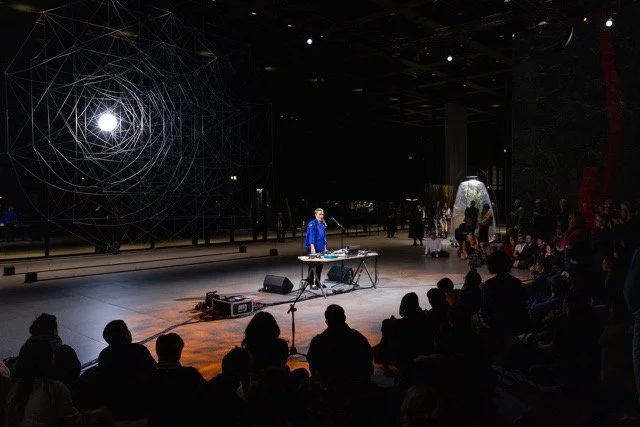
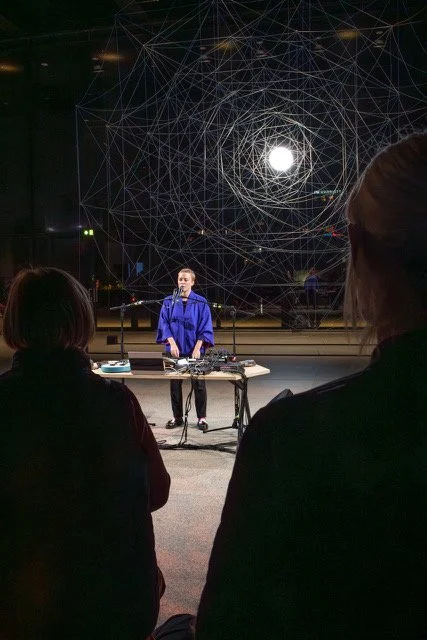
UN Live carries a belief that culture can awaken connectedness and understanding between humans and the planet. How have you witnessed artists illuminate the threads that bind us—moments that surprise even you with their power to foster deeper connection?
Olafur Eliasson: I’m thinking of a recent work, called Echoes from the Future, 2025, made by the Berlin-based performer Rike Scheffler in collaboration with Robert Lippok. Her performance was staged in front of Ivana Franke’s spider-web-like light installation at the Neue National Galerie in Berlin in November 2025. Scheffler and Lippok were connected to the Institut für Raumexperimente (Institute for Spatial Experiments), an experimental arts education programme that I founded and ran for five years (2009–14). They performed an interspecies concert with sounds of humans, animals, volcanos, glaciers, interwoven with AI elements. The human and nonhuman were brought together, which called for a very bodily kind of listening. The experience of it was, for me, like passing through an immersive wall and into a space where traditional assumptions of the world are suspended. It called for a certain softening within the listener, for tenderness and attention towards what filled the space. I trust that experiencing tenderness within an artwork—or what you might call a certain blurriness—can be highly meaningful. Being tender can be a force of change.
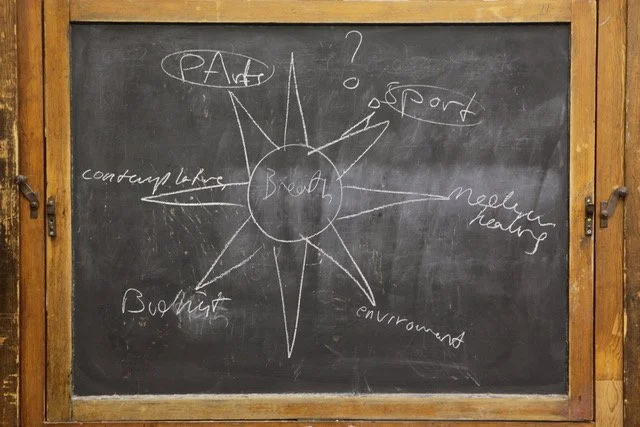
Sketch for the London 2012 Olympics
UN Live: If you could craft a single experience that every person on Earth could share—one that makes connectedness palpable—what would it be, and how would it inspire people to relate differently to one another and to the world we share?
Olafur Eliasson: If we just knew, the world would be a better place! But I did, in fact, make an attempt once—back in 2012, within the context of the London 2012 Olympics.I wanted to work with something really simple: breath. It is a basic physiological fact that we all breathe, and this binds us together. With my artwork, I wanted to invite everyone to participate in the Olympics by taking a deep breath together. Breathing is key in elite sports. And it’s key for all of us if we want to regulate our bodies and emotions. Yet, we tend to forget that it is right under our noses, in our noses—available to all. Air. So, taking a deep breath was the bridge for me that could unite people, make us all participants in the Olympics.
If you direct your attention to what we take for granted—air, for instance—a colourful bucket of questions arises that I won’t go into here, questions like: who owns air? Who makes decisions about air quality on behalf of other people?
But my artwork—which I’d called Take a deep breath—did not come to fruition. Breathing together was either too radical or too insignificant. Or doomed not to be art. I don’t know. Someone leaked my idea for the artwork to a journalist who wrote a critical piece about it and the budget was pulled.
UN Live: Sometimes it feels as if the world is at a turning point, and what we hold as true and valuable is ready to shift. Do you see it that way? And in your view, what is the most important understanding that many people will come to over the next decade?
Olafur Eliasson: With regard to this idea of a turning point: yes, I get it, and, in some respect, it feels that way. At the same time, I am reminded of words by geographer Kathryn Yusoff. She looks at the intertwinement of geology and racism, and her point is that ‘we’ get it wrong.
The Anthropocene, and the big shift we see it bringing about, is white. ‘We’, in the Western world, fear the ending that the Anthropocene will bring about. And Yusoff points to the fact that countless apocalypses have occurred before the present moment: “The Anthropocene might seem to offer a dystopic future that laments the end of the world, but imperialism and ongoing (settler) colonialisms have been ending worlds for as long as they have been in existence.” “The Anthropocene as a politically infused geology and scientific/popular discourse is just now noticing the extinction it has chosen to continually overlook in the making of its modernity and freedom” (from A Billion Black Anthropocenes or None, 2018).
In other words, the conversation about the Anthropocene and our fears about the collapse of the world fails to acknowledge how the system was built—on ending worlds through enslavement and exploitation of billions of Black and colonised peoples by a white supremacist minority. I think that’s really important to remember while engaging in climate action.
I don’t feel that I’m in a position to generalise about what people will experience, think, understand, or realise in the coming decades. I can simply say that in regards to the climate emergency, a part of me is absolutely terrified, frozen, and feels at a loss about what to do. And another part of me considers myself ‘a prisoner of hope’, to quote the late Desmond Tutu. But being hopeful definitely won’t solve the climate crisis. We must act. I have to act. And I try to navigate everyday life, including working and decision-making in my studio, while carrying all of this within me. And, sometimes, I find inspiration in the words of N. K. Jemisin, the science fiction and fantasy author: “Let’s start with the end of the world, why don’t we? Get it over with and move on to more interesting things” (from her book The Fifth Season).