
The HERDS
Every great initiative starts with a purpose. Can you share what your initiative does, the communities you serve, and why this work matters in today's world?
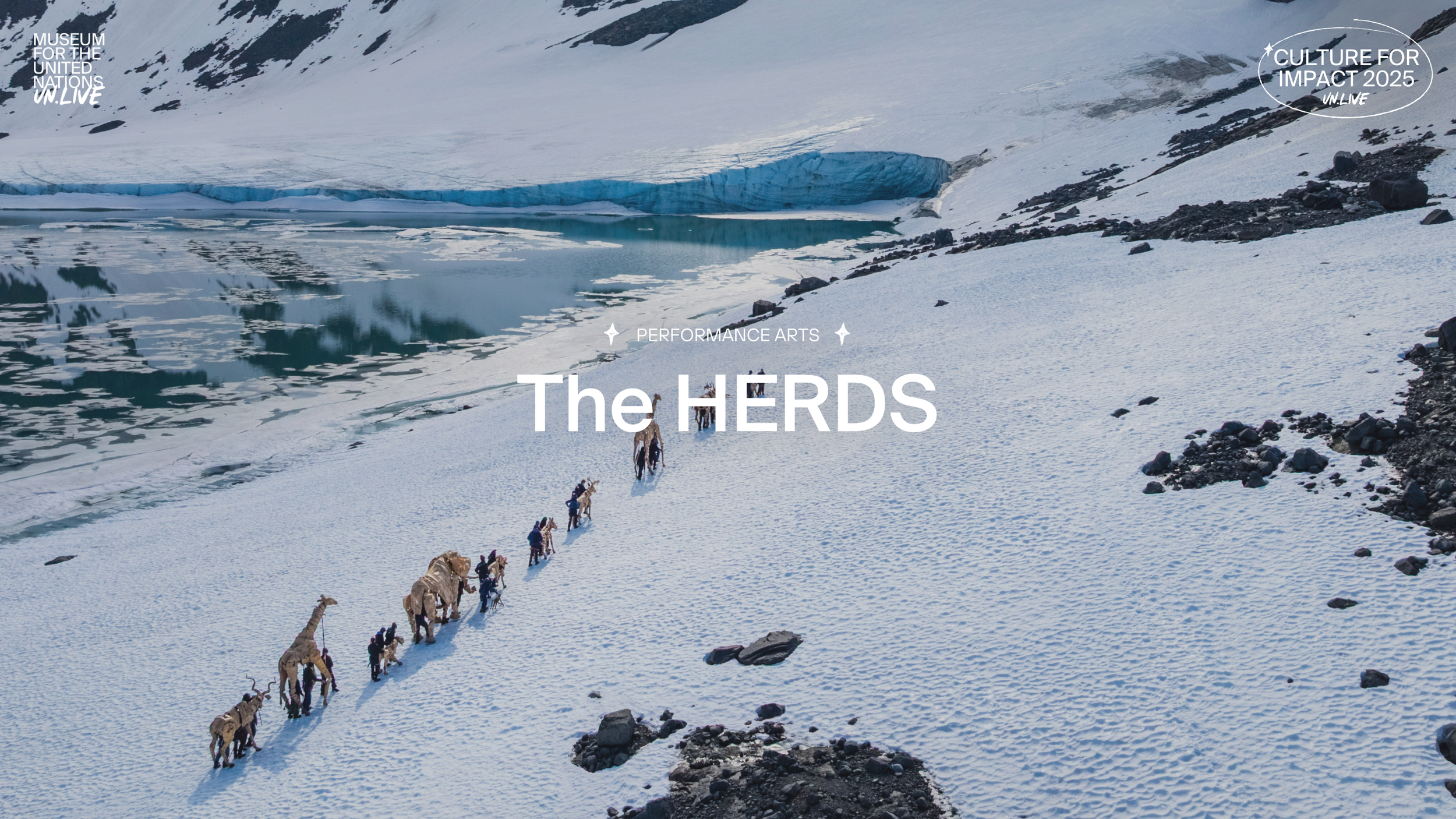
The Herds is a work of public art and climate action on an unprecedented scale. Created in 2025 by The Walk Productions, the work featured life-sized animal puppets migrating across a 20,000km journey from the Congo Basin to the Arctic Circle, designed in Cape Town by Ukwanda Puppets and Designs Art Collective. As the animals moved through cities, they embodied the urgent reality of climate and environmental collapse. Thousands of citizens joined The Herds as puppeteers in cities across Africa and Europe, demonstrating the value of citizen-powered art: a new form of protest, not rooted in anger but instead in beauty and creativity.
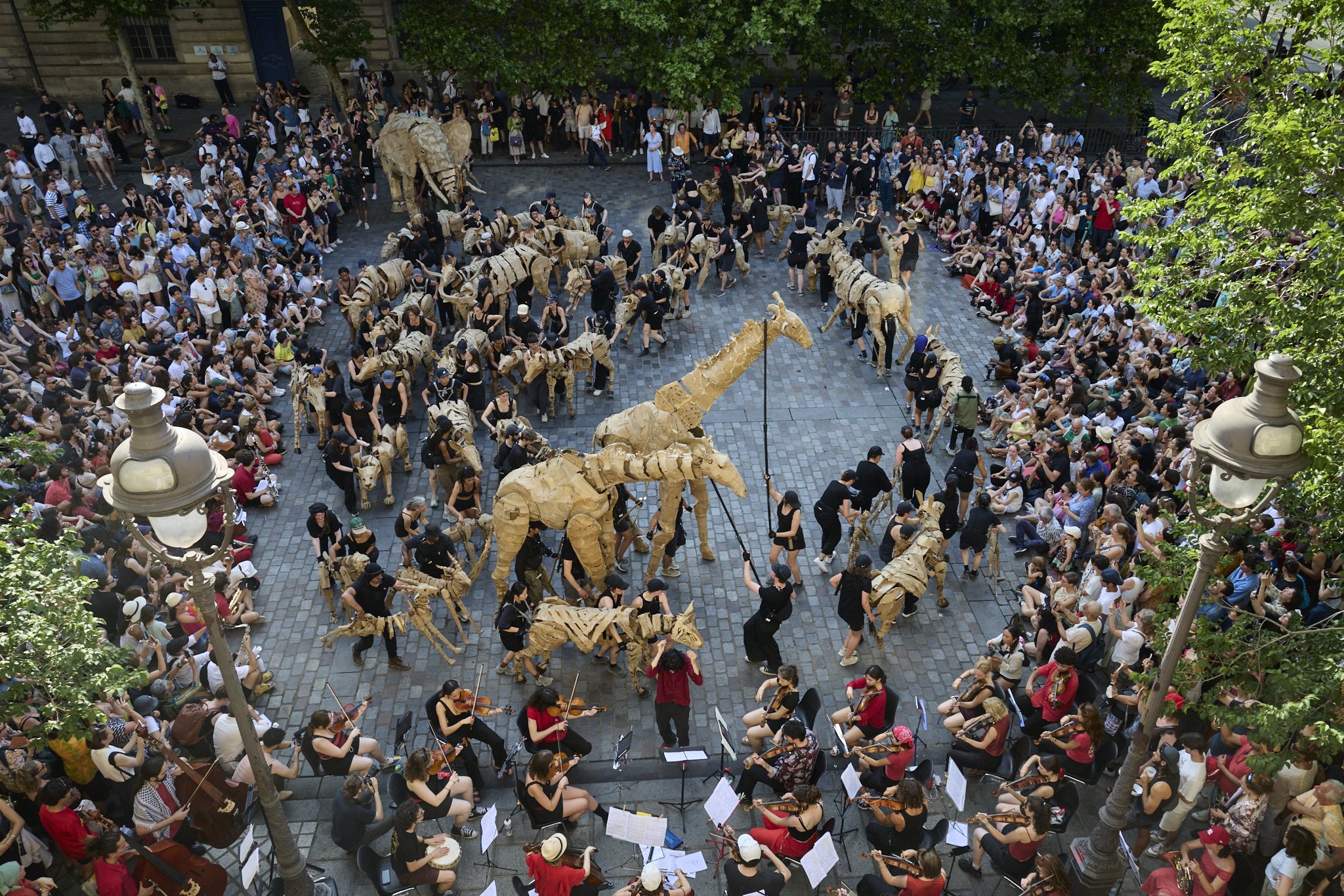
Photo: The Walk Productions, photography by David Levine - Day 2, Paris 27, The HERDS
We're thrilled to learn more about your work. What does being featured on the 2025 Culture for Impact List mean to you and your initiative? How do you see this recognition supporting your mission or amplifying your impact?
When we talk about climate and humanity’s constant attack and bombardment of nature, our attempt is to change the discourse, to challenge the prevailing narrative of our relationship with the natural world.
Receiving such a prestigious accolade enables us to not only talk about our work, but also to amplify the values that stand behind our work. It is also vital recognition for our global network of cultural and environmental alliances, who together form a vibrant and varied coalition where every citizen and partner is valued. To see that their joint effort has resulted in such lasting impact and to have that impact validated by UN Live is very exciting. I know it will be tremendously useful for us and everyone who came together to make The Herds possible.

Photo: The Walk Productions & 88 Life Studios, photography by Kashope Faji - Lagos, the HERDS
Let's talk about hope. In your view, what role do arts and culture play in helping people reconnect with a sense of collective possibility? How can creativity and cultural expression encourage communities to imagine and work toward a better future together?
As artists we want to – we have to – presume that art matters, even in such challenging times as these.
We believe that culture is the way we shape narrative, and that narrative is the force that shapes the world. The ways in which we live our lives – our behaviours, our choices – are all driven by narratives and stories.
At The Walk Productions we create geographical, multicultural, narratively driven, durational projects because we believe in the power of we the people. We believe that the bond between us – as humankind – is rooted in the word kind. In the case of The Herds, this manifested as one long line that stretched from the Congo Basin to the Arctic Circle and back, with a real exchange and deep respect for the knowledge and creativity that emerged in the spaces between these extreme environments.
Many people believed that The Herds was unproduceable. Too big, too ambitious. The success of the project - which echoed and united people from across 11 different countries - demonstrates that all is not lost. We can collaborate, we can think outside the box. We can harness the enormous amount of generosity and creativity, and together think more wildly and audaciously.
The Herds demonstrated to us - and to the millions watching - that the seemingly impossible can be achieved when we work together with a generous spirit, with deep respect for local knowledge and with kindness.
What inspired you to use socially engaged arts as a tool for positive change? How did this medium become your way of making a difference in the world?
Amir Nizar Zuabi, Artistic Director of The Herds:
I have always been a political theatre maker. I create theatre because I have something to say about the world I live in. And I find our world endlessly interesting. There is always an inherent tension when talking to an audience, because you're trying to talk about the vast, complex world that you live in but in reality you are talking to a relatively small group of people, sitting in the comfort of a warm, dark room.
Throughout the Little Amal project we imagined making theatre without the theatre. I fell in love with the vast scale of the streets, its wildness and energy. On the streets, everything is accessible to everyone. There is no hierarchy. It becomes popular because it is about the people.
In many ways The Herds was made as a response to the people we met whilst walking with Little Amal. Again and again we encountered people who had fled their homes as climate refugees. We knew we needed to make a piece that responded to the climate crisis, that dealt with the exodus of humans and nature as a result of the degradation of our planet.
The forces of destruction and of togetherness lie at the rumbling heart of The Herds. There is something exciting yet unnerving about being in the presence of these majestic animals. You’re operating in the streets where anything can happen, with wild, snorting, seemingly uncontrollable beasts. You’re in their world, and they are also in ours.
When you’re operating in the streets you’re operating with freedom. There is no pre-existing codified agreement like there is inside a theatre. Out on the streets, everything is ad hoc, competing for just a moment with the cacophony of people’s busy lives. What we create can only break through the noise if it has total clarity. As a director, this is what is so challenging. You are re-writing the contract between you and your audience all the time.
If you’re not on the top of your game, your audience will leave. They’ll get bored. They’ll continue with their shopping.
Because of the severity and seriousness of the themes that we talk about in our work, we believe we must be at the top of our game. When you are representing the story of an immigrant child escaping the destruction of their home in the face of global indifference and hatred, you must be at your best to do justice to her story. When you are the voice of a herd of animals fleeing the destruction of the natural world, carrying a warning directly into urban city centres, you must be at your best. In these moments you are representing the pain of the world. That’s a responsibility that I enjoy and hope to serve with honesty.

Photo: The Walk Productions and Givisme, Photography by Ard Jongsma - Aarhus 43, The HERDS
What has the impact of your work looked like? We'd love to hear stories, feedback, or specific moments when you saw your initiative making a real difference in someone's life or in a community.
We strive to make an emotional impact on people in all work that we make, but the work we have been making on the streets resonates with a different kind of emotional impact.
Suddenly, when you place a work of theatre or dance on the streets, the streets ignite together in community, in raw, pulsing beauty that becomes infectious. It ripples through a crowd and you can watch in real time an idea being understood and absorbed.
We saw this happen hundreds of times throughout our journey with The Herds, but one of the most beautiful moments was at the end of our events at Somerset House in London. A family with young children were sitting close to where I was sitting (I was live-directing the show, squatting on the ground, speaking to the puppeteers quietly through my radio mic). The piece ended with the animals dying, one by one. When they were all dead on the ground the father of the family said “that is really sad isn't it” and one of his children said “it is, but we can stop it”. Here was an older person accepting the irreversibility of death and grieving it in that moment, and a child understanding that we still have the ability to change things, that we still have hope.
Whilst telling a story of wildness and beauty we also uncovered a story of grief. This was especially tangible after events people would ask us “where are the animals running to now?” Sometimes people were very distressed when I told them “they're going to run until the end of the world and when they reach the edge, they will have nowhere else to run...”
It was important for us to not only talk about hope but loss. To comprehend what it is that we will lose when we are faced with adaptation and change. Because only when we start to talk about nature in terms of what we will lose, will we start fighting to keep it.

Photo: The Walk Productions, Courtesy of La Biennale di Venezia, photography by Andrea Avezzù, The HERDS
What do you hope others can learn or take away from your initiative? Are there key approaches, values, or insights that you believe could inspire others to create change through culture?
Think big. Bigger than the scope of this world. Think outside the norm. And then, whilst you’re thinking big, think small. Think about the local, the intimate. Think of the connective tissue that connects communities and connects you to the people around you. The same delicate tissue connects global issues and holds together huge coalitions across oceans and deserts.
Start to imagine yourself as part of this coalition. When you’re the instigator of something you can become connected to something very, very big. When you’re standing in the centre of a sandstorm, you can’t control the particles of sand. If you try, you’ll be buried underneath them. But if you listen to their wisdom, you can fly with them.
This is core to the philosophy of The Walk Productions. We create vast artworks across geographies with thousands of participants, but we know that we can never know a locality better than its local people. We know how to create magic through theatre, but that’s all we know, and the rest is there to be discovered.
At UN Live, we aim to harness culture as a force for empathy and collective action. Looking at your work, how do you think popular culture platforms can inspire people — not only to care about the planet, but to take meaningful, connected, and concrete action?
Culture can inspire us to care for the planet by transforming us from passive consumers to active participants. When artists invite audiences into a story or a movement, they create a sense of shared ownership — a feeling that we are not just watching something unfold, but helping to shape it. And when we help shape something, we are far more likely to protect it, nurture it, and act on its behalf.
Beauty and wonder also play an essential role. Art and culture remind us to look up from our screens, to notice the world again — the small details, the moments of surprise that make our environment worth protecting. The act of noticing is itself transformative; it awakens responsibility. Experiences of beauty, adventure, and togetherness help to galvanize us as part of a larger journey rather than isolated observers.
Whether in an opera house, an amusement park, or out on the street, powerful cultural moments weave story, movement and excitement to create communities that feel the thrill of being “in it together.” We believe this feeling of running with the herd can translate into meaningful, concrete environmental action.

Photo: The Walk Productions, photography by Vegard Aasen - Glacier 8, The HERDS