
Daniel Roa on silence itself as a tool for connection
In The Shift, UN Live’s thought leaders explore how music, art, media, and even everyday spaces—from stadiums to dinner tables—can become stages for more connection, inspired empathy, and collective action. In today’s Q&A, Annesofie Norn, UN Live Lead Curator and Head of Communications, speaks with Daniel Roa, musician, producer, and founder of Vozterra, on how sound and silence can become vessels for memory, spirit, and connection with the natural world. Read along as he shares how music can transcend words—inviting us to listen more deeply, remember the earth that unites us, and rediscover the silence that helps us meet ourselves again.
It’s time to rethink—and imagine the futures we want to create.
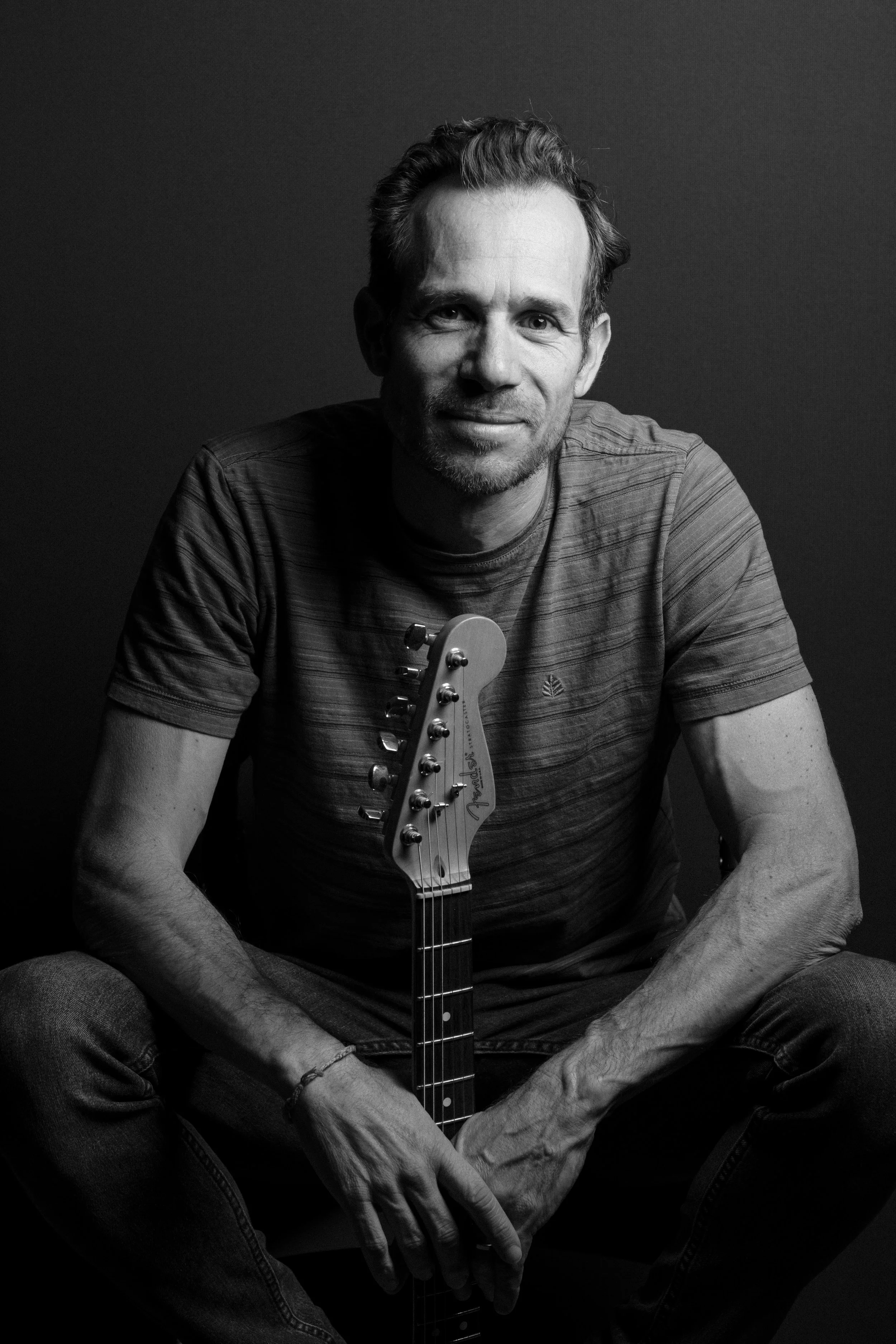
Q: Daniel, I’ve always been fascinated by the way music moves people in ways words can’t. When you’ve been working with Vozterra or Sounds Right, have there been moments that surprised you—where music actually changed how people felt or connected to an issue? I’d love to hear what that felt like for you, and how it shifted your own experience too.
A: Yes, there have definitely been moments that have been surprising; moments that reveal a new way of listening. The time when all of this began was during the pandemic, when I decided to make music incorporating the natural world into the creative process. Going out to a park near my house and recording sounds from that living planet that was awakening again, to be used as a narrative thread in a new song, led me to a new way of relating to the creative process. The music that began to emerge started to call for more and more silence—meaning more spaces where the space would be left empty so that the genuine voice of the Spirit could be born there, if you will... That was the first time I entered into a closer relationship with that experience of silence in music. The song I created at that moment is called "Baile" and is part of the first album, Sounds from Your Window, which Vozterra released during the pandemic and which later would serve as a seed for the birth of SoundsRight.
Q: I imagine that when you collaborate with communities, music becomes more than just sound—it carries memory, story, identity. How have you seen it do that? What’s it like to witness those stories coming alive through music, in ways that words alone could never capture?
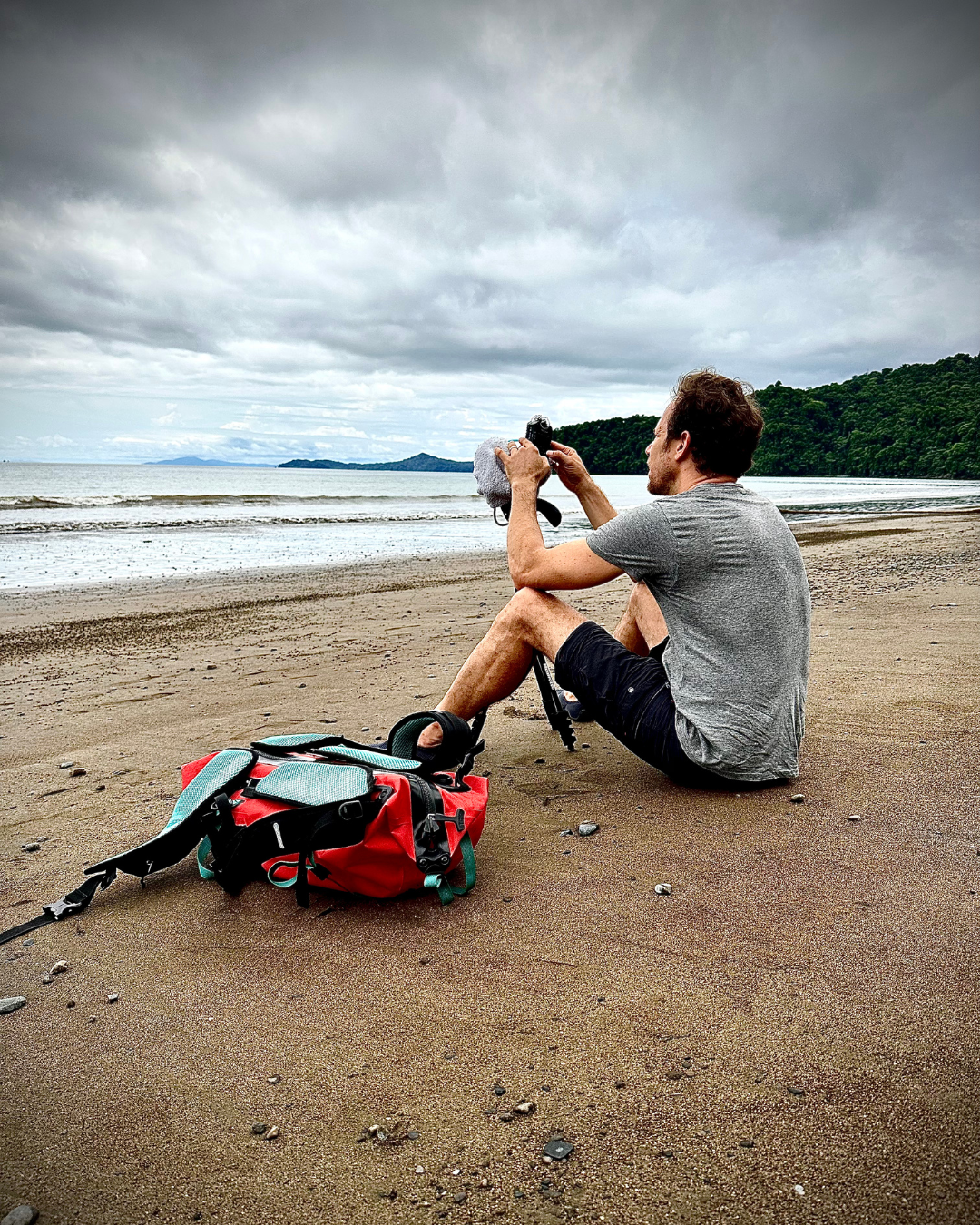
A: Making a sound recording in territories and their respective communities to then bring it into the creative process is a way of bringing the memory of these places and incorporating it into the narrative of a song, for example. It is not only about the words; it is about the language, the precise moment of the recording in time and in the present space. In that soundscape, a context is captured of the moment we live as a race. There is a common space, a common ground, a shared reality that connects us all, and that is the planet. And within these narratives, the message is always present expressing the urgency to learn to live harmoniously in the Common Home that sustains us.
Thus, music has the possibility of becoming a vehicle that transcends music itself and invites us to enter the subtle space of that primordial element that connects us as humanity. Recently, I attended a workshop that speaks about water as the element that inhabits us, that permeates all living beings on Planet Earth since ancient times, before our existence as a species. According to ancestral traditions and other spiritualities, the Spirit dwells in water, called by different names by different cultures and religions. I really like the idea of imagining ourselves united as humanity in the same Spirit through that element, water. And I love the idea of music being water for this purpose.
Q: If you could pose one urgent question to humanity right now—something you feel we really need to reflect on—what would it be? And I’m curious, when you think about that question, how might music help us feel it, rather than just think about it?
A: Well, in recent years I have been reflecting a lot on silence as a treasure we have lost. Silence asks us for stillness, for solitude, for interiority, for presence—things that the current world does not allow us to have. More than an urgent question, I would think of it as a provocative invitation to return to silence in the form of a question. One that helps give time back to silence, to remember the silence when we were in our mothers' wombs, so that in that place we can connect with the most essential. You will not connect with the essential through absolutely anything the world has to offer. Only inside yourself, in that encounter with the Inner Castle, with the Inner Master, will you be able to recover that treasure.
The question could be something like: Would you accept the challenge of having a reunion with yourself in a space of silence every day upon waking for the next 30 days?
Q: You move between being an artist and an advocate in such a fluid way. I’m curious—how do you hold both of those spaces? How do you keep music alive, intimate, and moving, while also speaking to social or environmental change? What does that balance feel like in your heart?
A: In my case, music is the meeting place of purpose and vocation—what is that which you love to do. For this reason, since it is something I feel happens naturally within me, I feel blessed and deeply grateful. Because I believe that in today’s world it is very difficult to articulate what you enjoy doing with what makes sense for your life, which contains the purpose that moves you from within.
It is vital to have the courage to say no to those things that are in dissonance with the heart, and it is there where the dynamics of modern life can make you stumble. And it is not a stumble evident to the outside world; it is something that happens inside you that, one way or another, makes you lose your shine. Personally, I think that this absence of the essential shine of people is something that has been normalized in today's modern culture.
There, in that decision-making, is where we must be attentive.
Q: Thinking about the future, and the next generation of musicians and storytellers, what would you hope they take from your work—not just the technical side, but the emotional, the spiritual, the part that moves people? How can music help them foster connection, empathy, and change?
A: Thinking about the future, the first thing I would like to inspire in those who get to know some of my work is that there is no future without the present. In the deepest sense of this phrase, there is no "I" if I don't take the time to enjoy myself in this moment, and make this moment the best possible moment. And, very importantly, it is not about the present being an ode to happiness... No! The value of this lies in being able to recognize, in all moments of life, a blessing, an opportunity to learn, to grow, to connect—being able to do this even with difficult moments, moments of pain, anguish, despair. It is there, in those situations, that we have a great opportunity to grow, to trust, to love.
We extend our sincere gratitude to Daniel Roa for sharing his reflections and insights with us, guiding the conversation on how music, silence, and spirit can reconnect us to each other and to our shared home on this planet.