
World Zero Waste Day with FoodCycle Indonesia
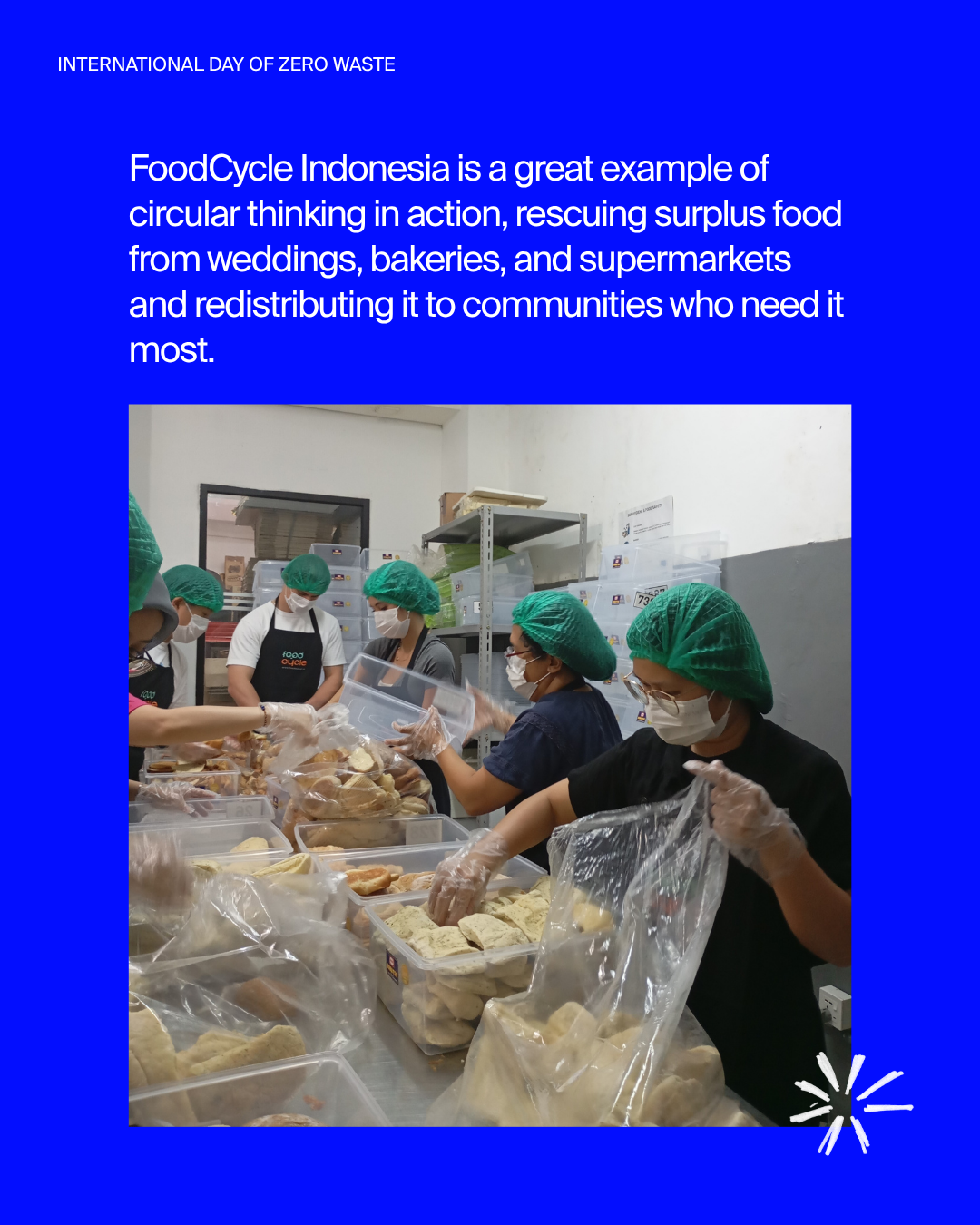
For World Zero Waste Day 2025, UN Live is highlighting FoodCycle Indonesia, a Jakarta-based non-profit founded in 2017 with a mission to build a circular food system that leaves nothing behind. Working across Jakarta and the surrounding regions, they redistribute surplus food from restaurants, supermarkets, and events to underserved communities; recover agricultural surplus directly from farmers and packhouses; process organic waste into fertiliser and insect protein at their urban farm in Cisauk, BSD; and close the loop through regenerative farming and food production. Seven years on, their work is living proof that food waste is not inevitable — it's a design problem, and one that community-led solutions can solve.
We spoke to Astrid Permatasari, CEO and co-founder of FoodCycle Indonesia, to learn more about their journey and what zero waste truly means at the community level.
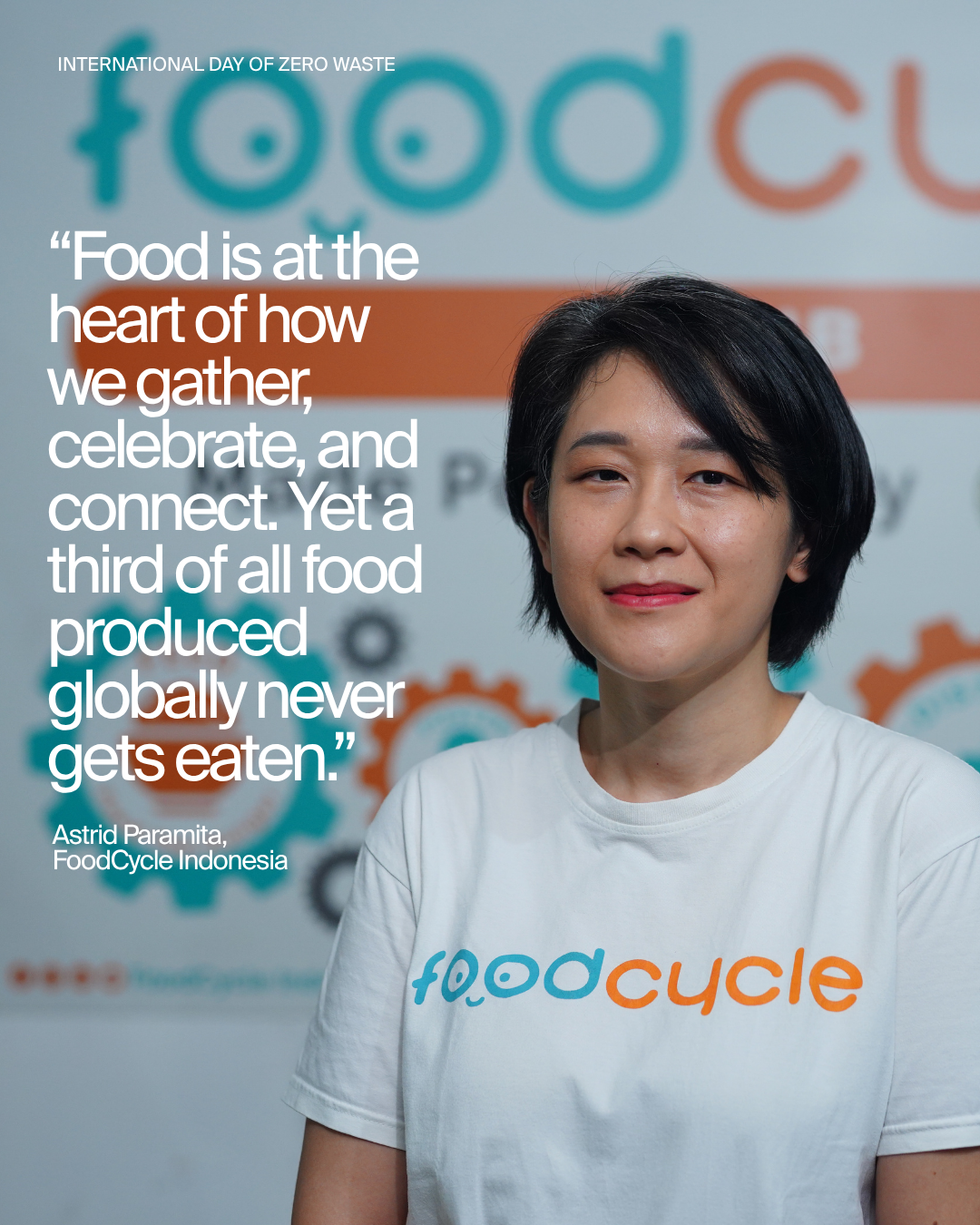
Food is at the heart of Indonesian culture, from food stand meals to wedding feasts, it carries memory, community, and identity. Yet, so much of it goes to waste before it ever reaches a table. From your point of view, what does food waste tell us about our relationship with food, and what does it reveal about the gap between how we celebrate food and how we treat it?
Food waste is a systemic issue not just in Indonesia, but across the world. It is a complex problem that exists throughout the entire food chain. At its core, I think we do value food, but we don’t fully value food itself.
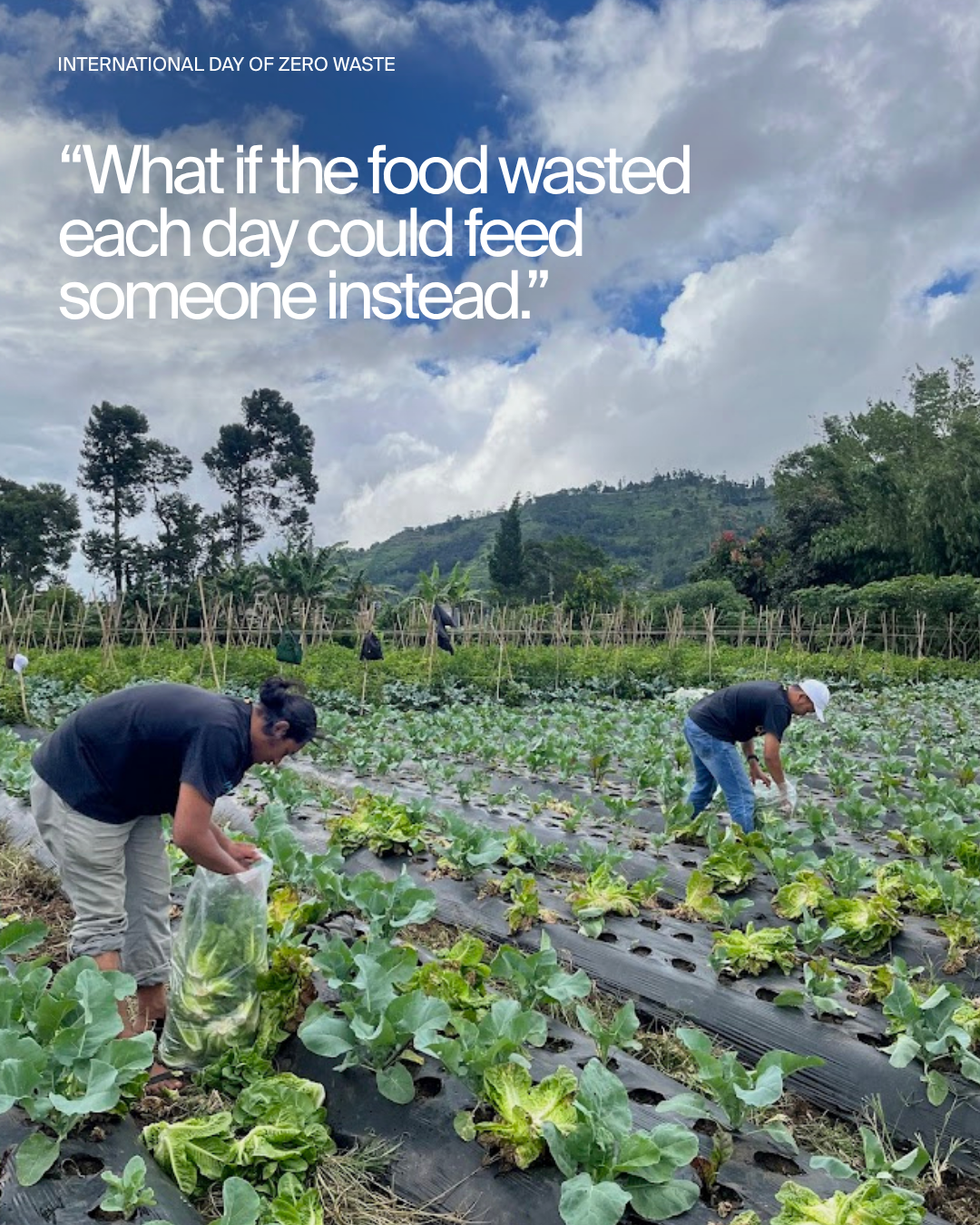
For example, vegetables that don’t meet certain visual standards are often rejected, even though they are perfectly edible. This shows how we prioritize appearance over substance. In many cases, especially at scale, it is simply easier for businesses to discard food rather than redistribute it. Preventing food waste is not as straightforward as it sounds — it requires coordination, systems, and effort. So the issue is not a lack of appreciation, but a system that makes waste the easier option.
Food culture has an incredibly powerful place in everyday popular culture as it shapes how people gather, celebrate, and connect. How does FoodCycle Indonesia use that cultural relationship with food to shift people’s relationship with food waste?
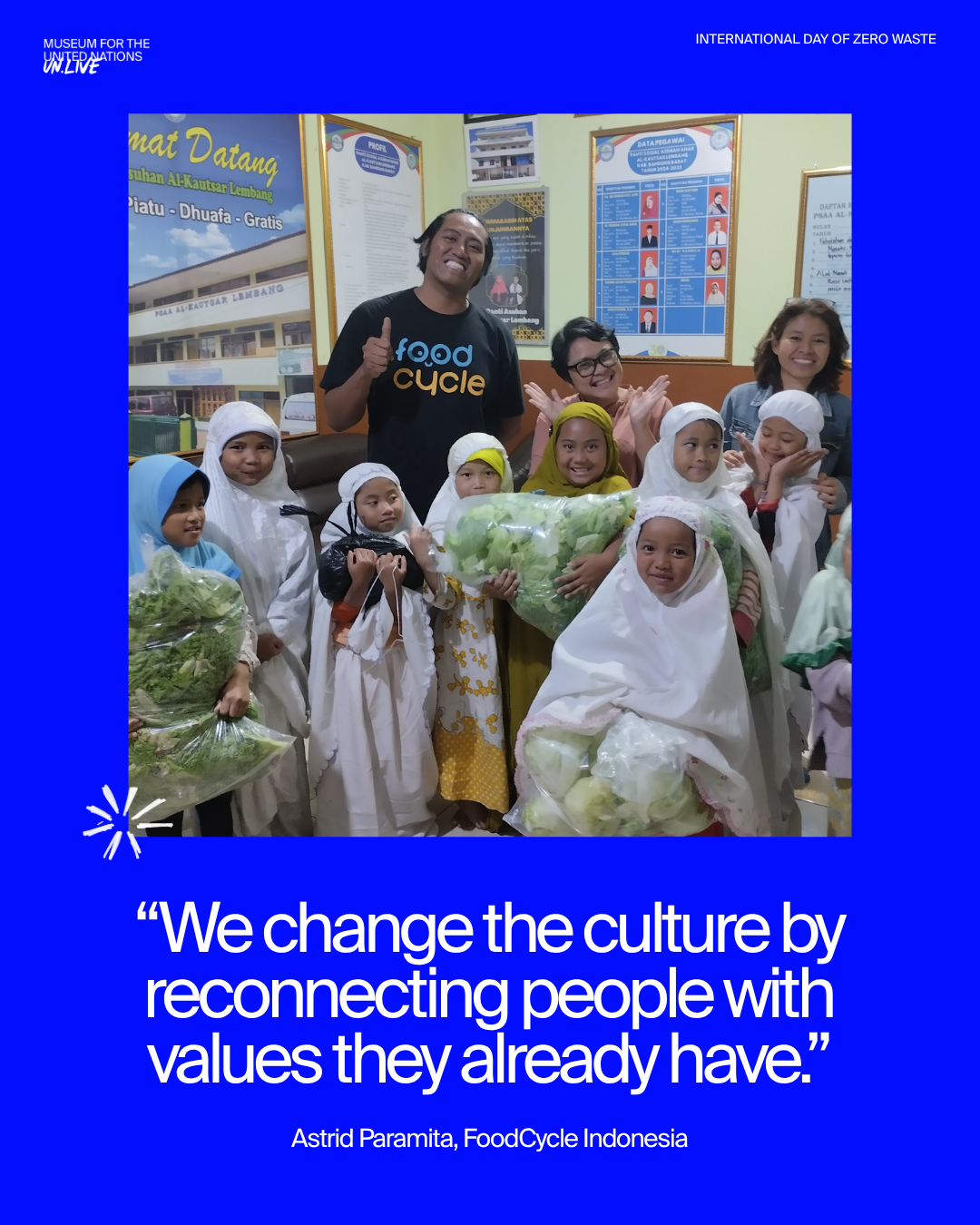
Indonesians are inherently generous. There is a strong culture of empathy, sharing, and gotong royong. The challenge is not willingness, it is awareness.
Many people simply do not realize the scale and impact of food waste. What we do is help raise that awareness, while also providing practical ways for people to act on it. When people understand the issue, they naturally choose to waste less and share more. We are not changing the culture, rather we are reconnecting people with values they already have.
Every surplus meal rescued by FoodCycle Indonesia carries a story from the kitchen it came from to the person it ultimately feeds. What is one story that has stayed with you, and what does it reveal about the food systems?
What stays with me is not the food, but the people. We work with a deaf community, mainly of families with very limited resources and very few opportunities. Despite their own challenges, they consistently find ways to support others in their community.
It is a powerful reminder that generosity is not defined by how much you have. In many cases, those who have the least are the ones who give the most. We see this again and again across our beneficiary communities.
The International Day of Zero Waste calls on all of us to rethink how we produce and consume. What would you want someone seeing this post in different parts of the world, to understand about their everyday food choices and the role they play in the bigger picture?
Food waste is a complex, systemic issue that spans from production to consumption. Because of that complexity, the simplest role we can play as individuals is not to add to the problem. Finish the food on your plate. Avoid over-ordering, especially just to follow trends. Be more mindful and respectful of what you consume. Food represents resources, effort, and livelihoods. In a world facing economic challenges and global conflicts, respecting food is more important than ever.