
Stina Daag on connection to self and others through the power of movement
In The Shift, UN Live's thought leaders explore how music, art, media, and even everyday spaces—from stadiums to dinner tables—can become stages for more connection, inspired empathy, and collective action.
In today's Q&A, Oda Almgren Lind, UN Live’s Creative Lead, speaks with Stina Daag, the founder and editor-in-chief of Human Shift and a Vipassana meditation teacher. With 25 years as a creative, she works with individuals and brands at the intersection of mindfulness, somatic practice, and expression — helping others reconnect to their intuition and creative voice. Read along as she explores the transformative power of movement, and how leading from the heart can spark profound shifts, both within ourselves and in the world around us.
It's time to rethink—and imagine the futures we want to create.
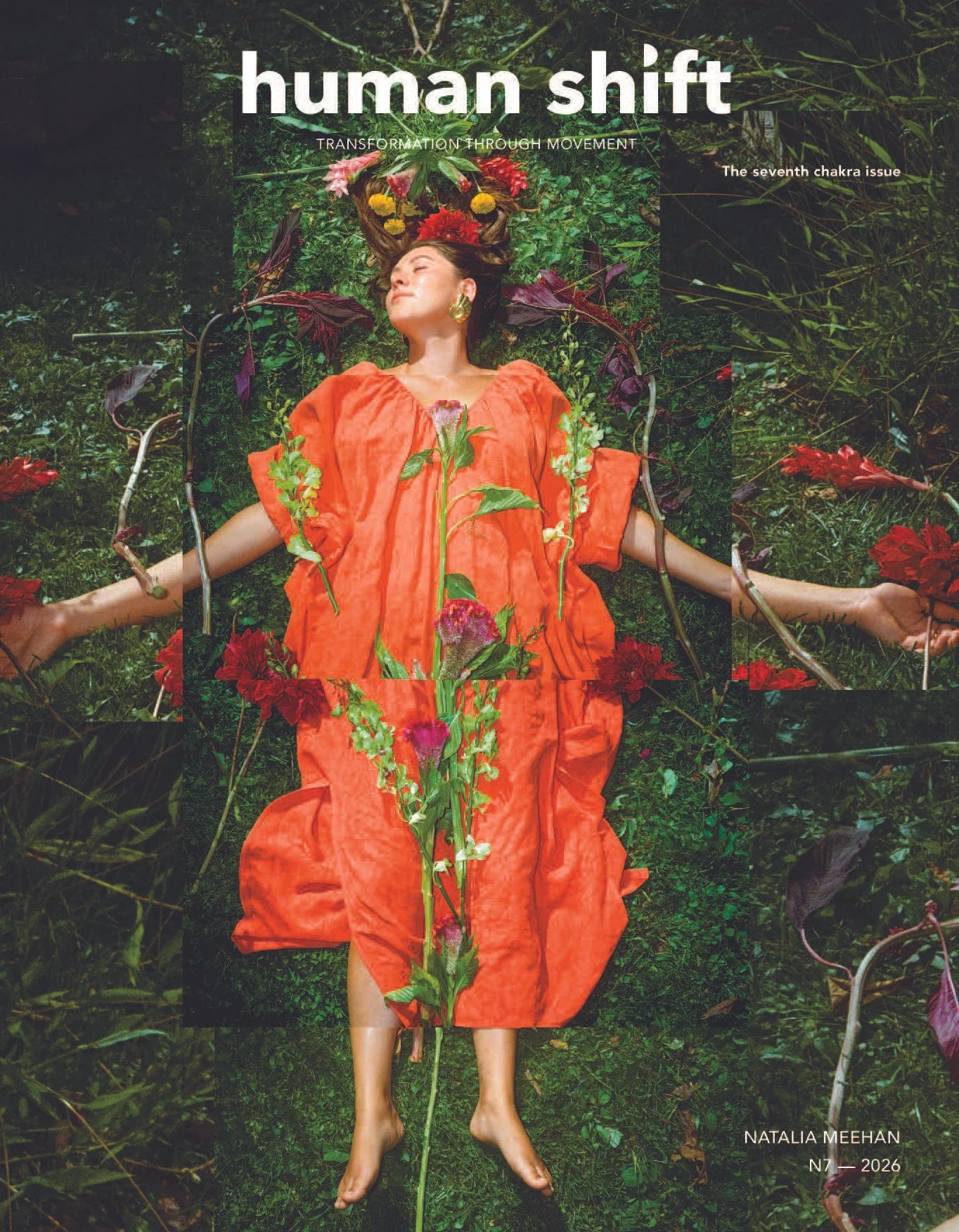
Cover issue 07, Natalia Meehan. Photo by Mara Hoffman.
UN Live: As the Founder and Creative Director of Human Shift, you create a platform that anchors in “transformation through movement”. How did that idea come about, and why do you think it holds such relevance as a lens for understanding who we are and where we're headed as humanity right now?
Stina: People were not really using the word shift so much when I created the magazine. And now it feels like when you say it, many have their own connection to a human shift. For me, it's really the change that happens to a person that is in motion. It can be an external shift causing an internal shift, or an internal shift causing an external shift. And I think that's where it's relevant in the world: we need to go through these internal shifts in order to change the world.
The phrase could kind of sum up my life. I've traveled a lot, moved a lot, changed a lot. Being stagnant has been a fear of mine, getting stuck, not evolving. But you need both. You need movement and you need stillness in order to digest the transformation.
When I started the magazine, I had this mantra — Newton's first law: 'A body in motion stays in motion.'" I thought about how I could use movement and my skills to change something in the world, and working at places like Harper's Bazaar and Marie Claire, I became more and more interested in the people behind the stories. So magazines became my platform.
UN Live: One of the things that became evident when reading Human Shift was that many of the stories in the magazine are rooted in personal practices — meditation, movement, voice. In a cultural moment influenced by high pace and technology, how can anchoring in the body be a form of resistance?
Stina: I grew up with a lot of anxiety in my own body, and noticed early on that my mind wasn't always my best friend. I come from a family immersed in different practices. My mom was a trained therapist back in the seventies working with EMDR and tapping, and my dad introduced me to meditation young. Bodily practices, especially dance and walking, have provided me with great perspective in many of my deepest, darkest moments.
I try to see all challenges in life as a type of practice. Whether it's a crowded bus, a breakup, or money trouble, I try to stay anchored in my body and slow down. In a culture where we tend to scroll and numb ourselves from depth, there’s a need to connect on an intimate level. To be present. We really need to connect to each other and to nature as an active act of survival.
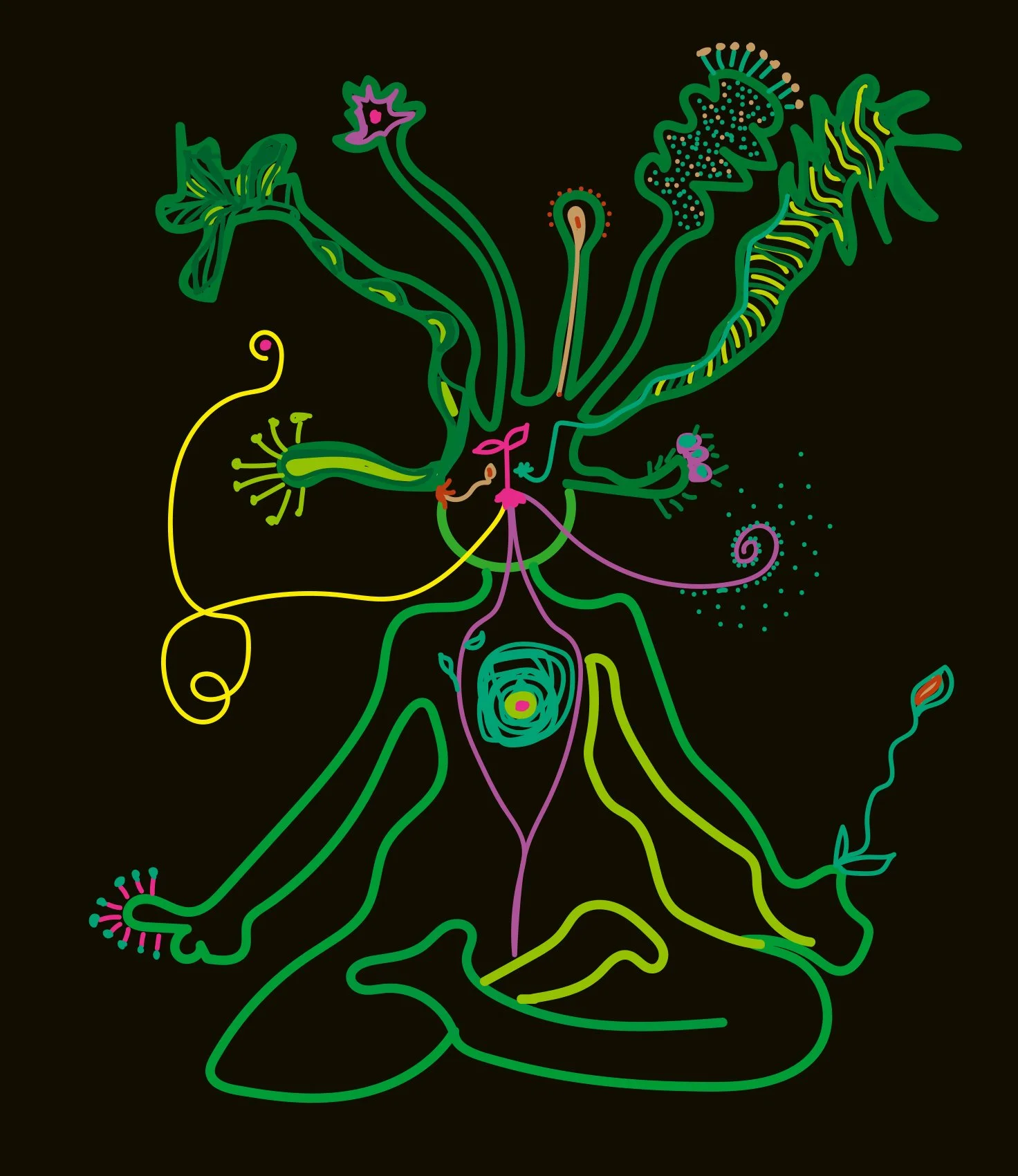
Illustration for Human Shift by Stina Daag
We are all interconnected on a deeper level, or as Dan Siegel who we've featured in the magazine calls it: intra-connectedness. When we realise this, everything shifts, and the love overrides the fear. I'm very convinced that we are all coming from love, and we are all love. The body knows on a deeper level than the mind.
But that's an ongoing practice. To pause and feel into our body, the sun on our skin and just being in the moment. That's why it's important to find fun and inspiring ways to stay connected to self and others. New practices, places, teachers, philosophies… that's really what the whole magazine is about.
All these teachers and philosophies have truly changed my life, from personal health to so many other things I've gone through. So I want to uplift the people who are really changing the world, and inspire others to connect through their voice, their vision, sex or food, and to see everything as an opening to shift from within.
It might start in a dance class, a meditation class, a yoga class, but the aim is to also bring it out into the world. You can't just leave it on the mat. That's the individual action we're each responsible for, trickling out and spreading to others.
UN Live: Across all the stories and people you've encountered through your work, where have you seen culture, art, fashion, or photography shift something in people? From sparking inspiration to changing how people see each other and themselves in the world?
Stina: It's difficult to see exactly how our stories in the magazine might shift someone, but many people have reached out saying "this story really spoke to me." But for me, it's also about how the people we collaborate with are shifted through the process itself. That’s something recurring.
Very often, we approach someone for a portrait or feature, and through our conversation realise they have such an interesting lens on the world. These moments have led me to commissioning people who have never written professionally before, knowing that it doesn’t have to be perfect, and it's all happening in that process. Our collaborators have then become more confident in their expression on different levels that they otherwise have not dared to go into before, and some of them have even ended up publishing books.
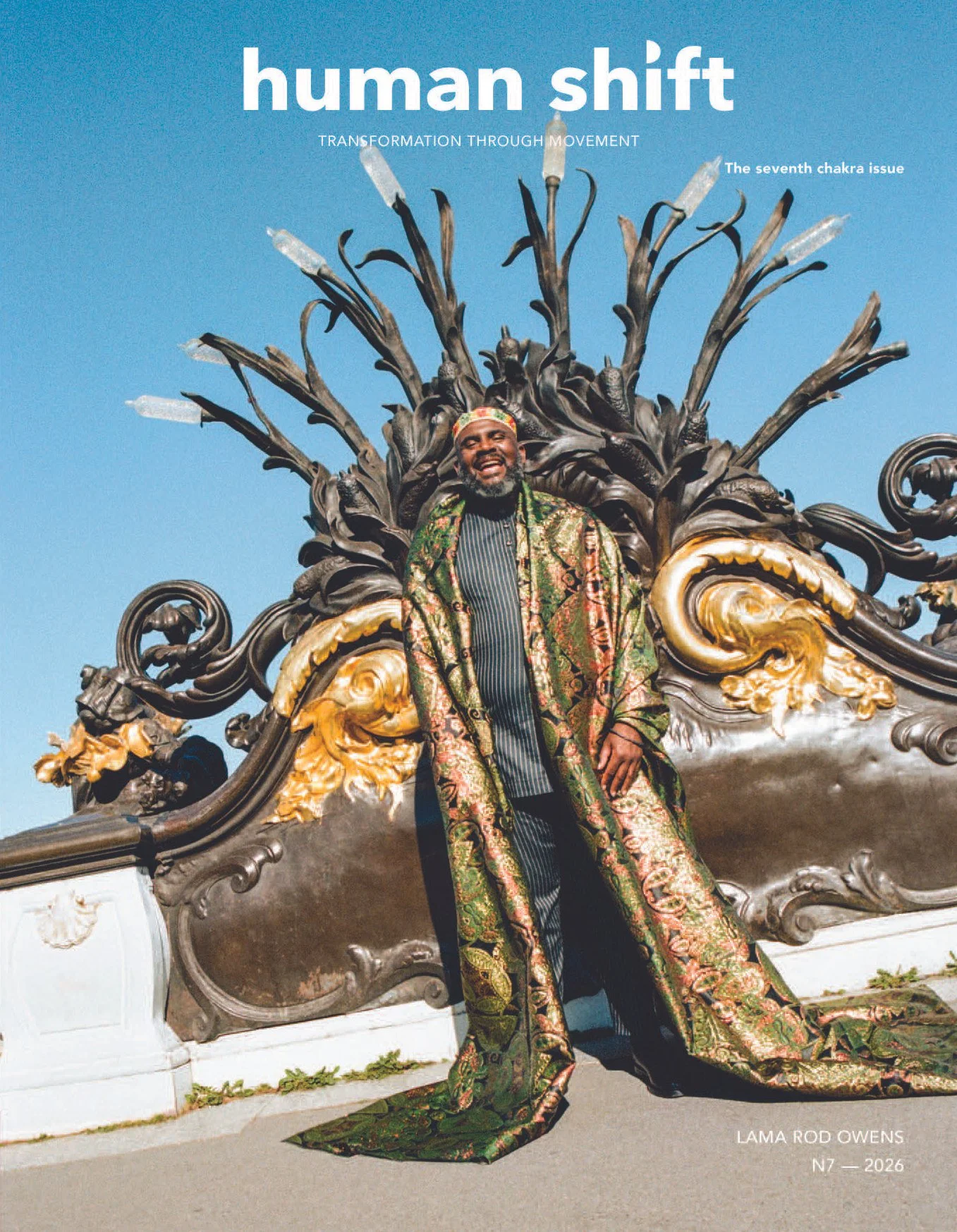
Cover issue 07, Lama Rod Owens. Photo by Linus Morales
Another example is our upcoming issue featuring Lama Rod Owens as a cover story, one of the meditation teachers I find the most inspiring. He presents himself as a fat, black, queer Buddhist meditation teacher, already far from the traditional image of a lama. I wanted to do a fashion story with him in Paris, and little did I know it had been his own dream since he was a teenager to be in front of a camera as a fashion model. He wrote to thank us for the experience, and the crew on set that had never met a lama before read his book afterward. It really shifted everyone involved, which inspires me so much.
That's one of the most important roles you have as a creative — to take risks and not be gripped by what everyone else is doing. If you believe in something and have a vision, push it through.
A while back we also featured Germaine Emery and Ebonee Davis speaking about the culture of Black hair, something current and important, though many weren't yet noticing it back then. That story resonated widely. And it shifted me too. Ebony brought this idea, it wasn't on my radar at all. Rather than directing, I was receiving. I'm a white, middle-aged Scandinavian woman with a lot of privilege, and that story changed something in me as well.
UN Live: One of the editions of the magazine explores listening to intuition and letting truth lead. How do you personally navigate that in your creative process, and what do you think shifts in a conversation or a collaboration, when someone speaks from the heart rather than the head?
Stina: Hmm. I love this question. Something I think about is how the longer you live, the more you realise, I thought I was there, but now I'm closer.
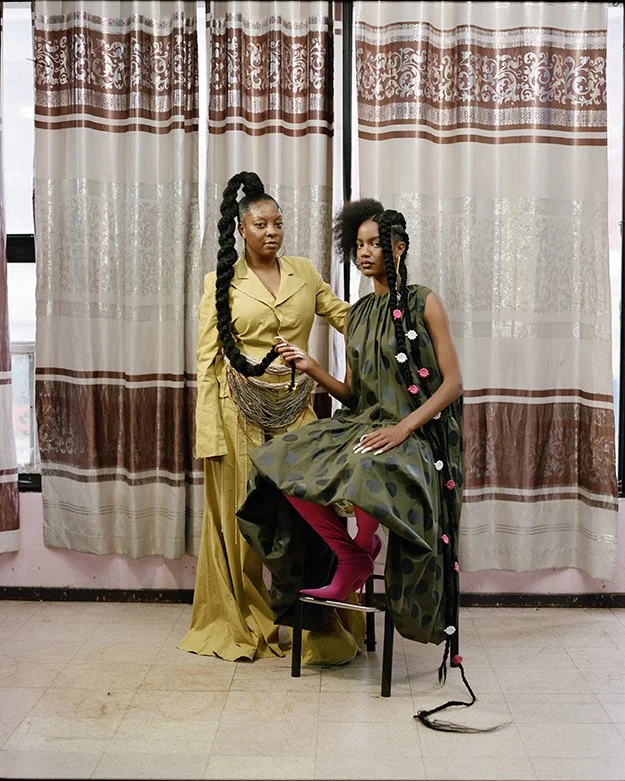
Ebonee Davis – A hair journey.
Photo by Renell Medrano, Issue 3 Human Shift
I grew up classically trained in violin and ballet, where it was all about rules, and I had a very hard time breaking free from these rules others imposed on me. Dance is now the movement form I use every day, but learning to dance freely was hard. When I started the magazine, the first issue was centered around the first chakra, and getting out of your comfort zone. I spent 10 days trying practices that made me deeply uncomfortable, but my rule was to stay until the end. Being in the body, listening to how it feels rather than how it looks.
Starting the magazine was as much a practice as an offering. I'm always trying to come back to the why. “Why am I doing this, how does it feel in the body?” “Is the decision coming from lack or fear?” And for me that has been more about learning to listen – to others and to my intuition.
And then there's truth. It's taken me a long time to realise there isn't one. Both in collaborations and within myself, I've learned that many truths can live at the same time, even in one and the same person. And I think that's what shifts in a conversation when someone speaks from the heart, it opens space for that.
I think that's more important than ever. A lot of the individual practices are. The same practice you do with yourself, you also have to do with others somehow, and we all have that responsibility.
UN Live: I know you’ve spoken about the community that arises through the creation of Human Shift, where people from different backgrounds find each other through shared passion. How do you see empathy live in those moments?
Stina: The magazine is very much about meetings between people, a Buddhist teacher portrayed by a fashion photographer, an ice skater in conversation with a neuroscientist. Different angles, but always narrowed down to one subject.
When those meetings happen, it creates an opening, a curated space where you have to listen and collaborate. And I think that shifts the person reading too, because it's built on personal stories they can connect to. I always ask people to speak from their own perspective in a way that feels genuine to them, so it doesn’t feel forced, keeping in mind that we have to be open mentally in order to receive.
I think empathy is different from pity. We need to be anchored in ourselves in order to connect to others without losing ourselves in their pain. We're not helpful to anyone if we're frozen by despair. I see empathy as feeling into someone's emotional state in a way where we can truly see and accept them without judging, and that only works if we listen. So I believe in creating these spaces where people feel safe to express themselves without being judged. That's when people realise we are all so much more similar than we think.
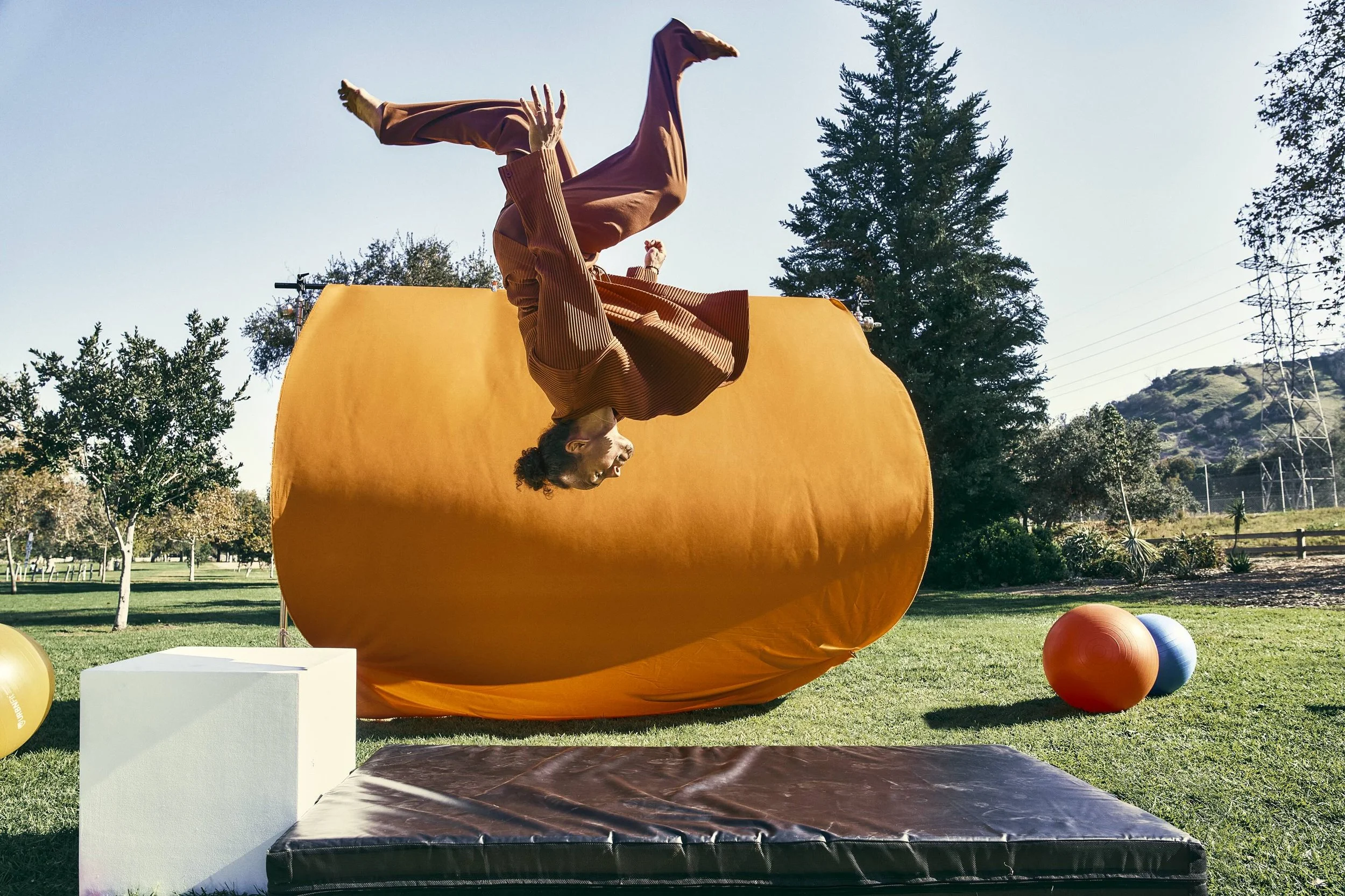
Elladj Baldé, Photo by Beau Grealy, Issue 5 Human Shift
UN Live: I wanted to end the conversation on the synergy between UN Live and Human Shift. At the heart of UN Live lies the idea that connecting people across borders inspires empathy and collective action. How do you think storytelling can cultivate that sense of a shared global “we” while still holding space for the depth and complexity of our local and personal stories?
Stina: We humans connect through stories, we always have. There's a reason a viral video of a baby ape left by its mother moves people: it's easier to connect to something when it mirrors something in ourselves. I see this in my own life. My younger brother struggled with drug addiction for many years and died from an accidental overdose. When meeting new people, I noticed how people's empathy shifted depending on whether they could relate — if they had a sibling, they could feel "what if that were me?" And on the other side, they could just as easily pull out of the story. It has taught me a lot about how we move in and out of empathy.
I started to observe this in myself as well, for example in conversations with people who do not necessarily have the same values or political views. That's why stories are so powerful. We need to learn not to turn away from the ones we can't immediately relate to. If we close off as soon as someone doesn't align with what we think is “good” or “worthy”, we're never going to make it as humanity. Everyone has a story worth telling. It's just about how we listen.
There's always work to be done, and it only happens in the meetings with people who don't come from the same place.It sounds so cliche, but it's the beauty in these kinds of practices that has made me feel more connected to humanity than ever. And that's what I want to offer through the magazine, that is my mission. It is a melting pot of skaters, surfers, dancers, scientists, architects, neuroscience — expressed through images and words. In the end, we all sit with the same questions. Just different ways of showing it.
UN Live: If you could gift the world a single photograph, song, podcast, poem or line that carries the change the world needs right now, what would it sound or feel like?
I love this quote by Anaïs Nin: "We don't see the world as it is, we see it as we are." I use it as a frequent reminder to calibrate my view of the world and my perception of it. It helps me stay curious and open, a feeling that is somatic for me, which is also at the heart of the upcoming Human Shift issue releasing 28 April, exploring the crown chakra. The mantra of the crown chakra is AH — to me, that is both a sound of curiosity and awe, and an exhale. If I could gift the world anything, it would be exactly that: that expanded, wonder-filled feeling.
We extend our sincere gratitude to Stina Daag for sharing her reflections and experience with us, and for guiding the conversation on how anchoring in the body is foundational to cultivating empathy, creative thinking, and action built on trust.
Follow them on @human_shift