
Jeremy Lent on recognising the world view that shapes our reality and choosing a different story
In The Shift, UN Live's thought leaders explore how music, art, media, and even everyday spaces—from stadiums to dinner tables—can become stages for more connection, inspired empathy, and collective action.
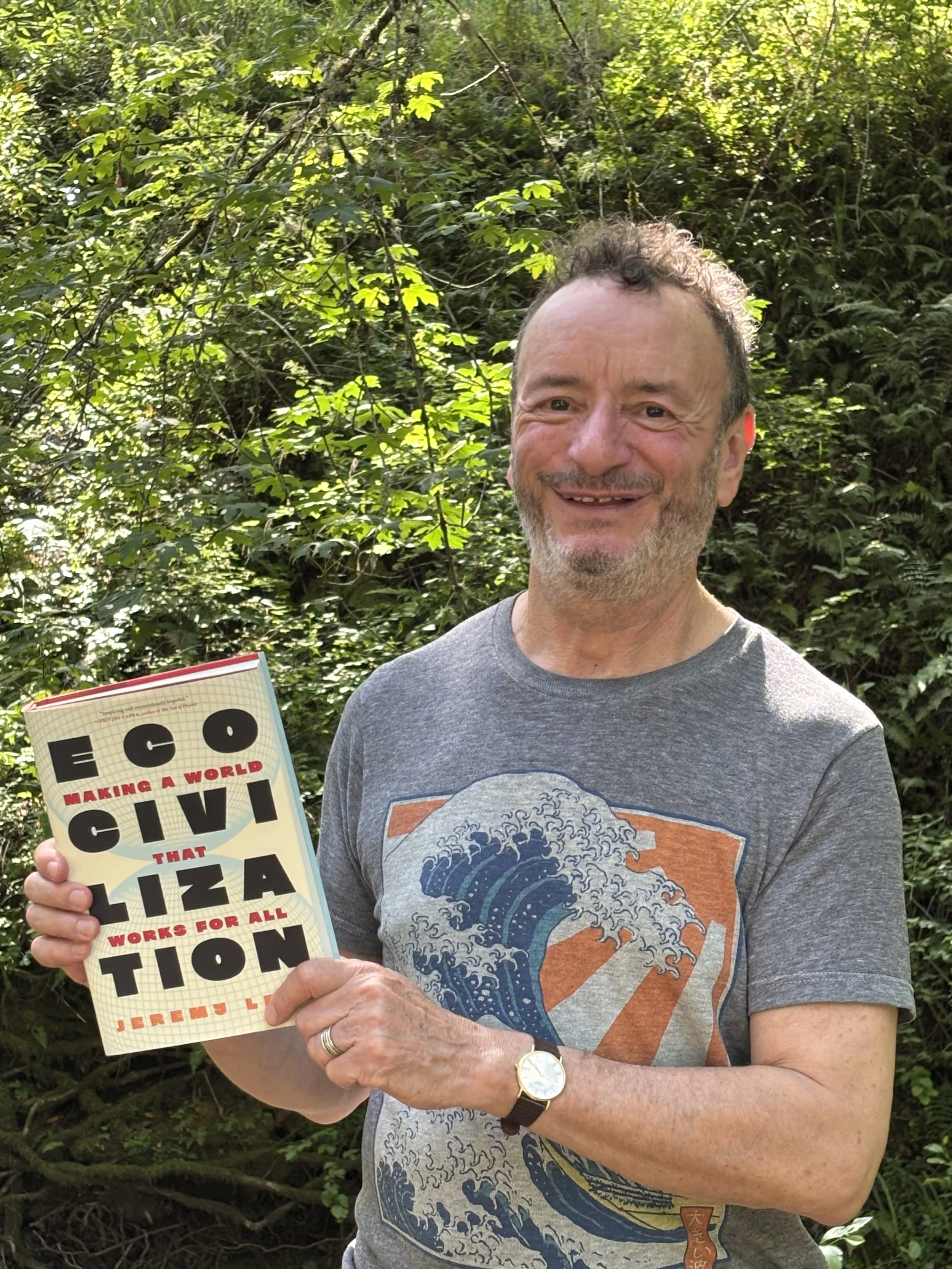
In today's Q&A, Annesofie Norn, UN Live's Head of Communications and Lead Curator, speaks with Jeremy Lent, author and founder of the Ecocivilization Coalition. A systems thinker who has explored the evolution of human consciousness and the roots of our current crisis across two continents and four decades, Jeremy works at the intersection of cognitive science, cultural history, and complexity theory—helping us understand how worldviews shape civilizations and how we might collectively reimagine our future. Read along as he explores why the most urgent transformation isn't technological or political but a shift in how we see ourselves in relation to life itself, how we can move from "I" to "we are life," and where he finds hope as things get darker.
It's time to rethink—and reimagine the futures we want to create.
UN Live: You've written extensively about world views and meaning-making across human history. What, in your view, are the most deeply embedded narratives shaping how we see the world today—particularly around progress, value, and what it means to be human?
Jeremy: I think it might be helpful to begin with just getting a sense of what a worldview is, because you almost need to recognize that we have a worldview before you can really begin to shift it. It's a little bit like that classic story of the fish: a couple of young fish swimming around in the ocean, and a big fish comes by and says, "Nice water today, right guys?" and swims off. One little fish says to the other, "What's water?" Because when you're embedded in a worldview, you don't even know it exists.
A worldview is like the lens we use to make sense of the world. Once you begin to see it as a lens, you can begin to explore what other lenses are available.
The dominant worldview arose in early modern Europe in the 17th century, and through colonialism got extended through the entire world. It's a worldview really based on separation—saying that humans are fundamentally separate from the rest of life on Earth. Even within ourselves, we're separate, split between mind and body. The rest of nature, because we're so separate from it, we don't even see it as having any intrinsic value. It's more like a resource to extract. Even other people are seen as resources to exploit.
There's a sense that our true nature is being individuals, and those individuals are selfish and greedy, and the whole aim of life is to maximize for yourself. That worldview has led to our global system of global capitalism and ultimately to this destructive place we're in right now. But it also leads to a lot of individual suffering, because it's very different from how we evolved as human beings to actually flourish.
UN Live: Given that this worldview is so intrinsically integrated into us that we don't even know we swim in it, what do we do to wake people up? What are the tangible experiences that we can create?
Jeremy: That's so important to ask. One of the most effective things we can do, especially in popular culture, is to just put in little glimpses, little hooks to open up people's curiosity to ask these deeper questions. Really invite them through curiosity, through recognising that something isn't quite right, to do their own explorations.
One thing that is now well understood by cognitive scientists is you don't generally change people's minds through intellect, through rational arguments. In fact, the better educated people are, the harder time they have being persuaded through rational argument. Our minds are like lawyers making an argument for a case.
So it's more a matter of reaching into a deeper layer of people's experience. A lot of Buddhist practice for individual awakening is recognising this sense of dissatisfaction, this "not quite enough" in our experience. Once we recognise that, we ask deeper questions: How can that really get resolved? Not by buying the next thing, but looking at the deeper layers of identity.
I think something similar can be done culturally—helping people to recognise this is not the way it's meant to be, this doesn't have to be like this. Once people get this sense that there's no reason why it has to be like that, it invites them to start asking questions. When they do, there's plenty of material that shows there are different ways of making sense of the world.

Mutual symbiosis: a foundation of life’s evolutionary success
UN Live: At UN Live, one of our initiatives is Sounds Right, where we recognized nature as the world's oldest artist and work with streaming platforms to pay royalties back to nature. We've reached over 300 million people and sent over $600,000 to conservation projects. What are your thoughts on initiatives like this that can drive and awaken and engage many people at scale?
Jeremy: What a wonderful journey Sounds Right has been on. What you're doing bypasses the intellect and reaches into the heart of nature, which is something we as humans evolved to be—connecting with the natural world. Those little glimpses of what's possible are supremely important.
Along with that, it's also important to point out what is being lost. In just the last 50 years, something like 75% of natural populations around the world have been lost. Really helping people to connect with the beauty and love of nature, and then to connect with how much this dominant system is destroying it, is very important.
But it's equally important not to just leave people in despair, but then lead them towards places they can engage, places to actually work together. Some of the most valuable opportunities are groups that do deep listening, connecting with community, and leading toward engagement—like the Work That Reconnects, inspired by Joanna Macy, or the Plum Village communities of Thích Nhất Hạnh.
UN Live: Could you speak a bit more about fractalised engagement?
Jeremy: I'm interested in the relationship between engagement and change at depth, and engagement and change at scale. When working with impact, there's often a tension — or at least an ongoing consideration — between reaching many people and creating experiences that deeply transform a smaller number of people.
Large-scale engagement has a clear value and role: it can shift narratives, visibility and collective awareness across broad audiences. But there's also another kind of engagement that works more intimately and experientially, creating deeper forms of connection, reflection and transformation.
UN Live: How do you see depth versus breadth when it comes to creating change?
Jeremy: That's a very interesting way to look at things. There are almost two dimensions to look at this fractal question about change. Most people are aware of what fractal refers to, but if it's a new concept for anybody: in all self-organised systems, including basically all natural systems, there are patterns that replicate themselves at larger and larger scales from the micro to the macro—similar patterns in clouds, tree branches, our lungs and neural systems, pretty much everywhere.
Maybe the first way of looking at it is to think about fractal from the point of view of where transformation has to happen.
I think it's helpful to look at three fractal layers of transformation: beginning with our internal transformation—recognising how our minds have been colonised by this dominant worldview. Then community—the people around us, because it's only in interaction with people that we understand our own patterns. Then third is the systemic layers—those structural layers of oppression and destruction. We can't ignore those.
To your point about depth versus breadth, you can be somebody who does work in a very deep way with people, helping them look at that inner transformation. That work can be profoundly important. It's not the sort of thing that can scale. You can't do that work with millions of people. But by doing that work deeply, it can help an individual find their own inner powers for bringing transformation out into the world.
At the other extreme, you can have a message that might appeal to millions of people. That is very important and necessary. But that's not going to be sufficient unless there are avenues available to people to go into community transformation and inner transformation.
All those three layers are most effective when they're actually working and interrelating with each other. The transformation doesn't happen first one then the other, but they're all interacting together.
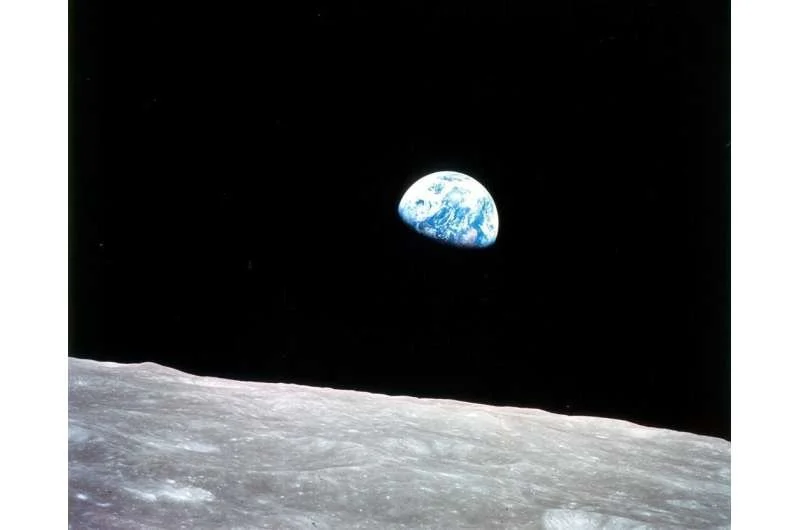
UN Live: When you look historically at human development and the stories that have shaped different phases of civilisation, there also seems to be a recurring pattern: major stories or movements emerge when collective consciousness or understanding reaches a certain threshold, and then something suddenly breaks through into the mainstream. I'm thinking of religions, or major cultural movements such as Me Too — movements that have been building from below for a long time before a story rises to the surface and becomes widely shared.
At UN Live, we work a great deal with the question of how these kinds of stories can be created or catalysed — for example through Nature as Artist. It's an attempt to introduce a story that creates a sense of awe and surprise in people's lives, hopefully interrupting habitual ways of thinking and prompting new questions and perspectives. We are interested in the kinds of stories or experiences that can open up new ways of seeing and relating.
At the same time, it seems that stories can only truly take hold when there is a certain level of cultural readiness or openness. From your perspective, how do you understand the relationship between collective readiness and the emergence of transformative narratives or movements?
Jeremy: What history shows us is that true paradigm shifts are actually very rare. For most of human history, as nomadic hunter-gatherers, humans saw nature as a giving parent and all living beings as relatives. That changed with agriculture and civilisation, when hierarchies, patriarchy and systems of domination emerged. New stories followed — hierarchical gods, priesthoods, and social structures that reinforced those ways of living.
That worldview dominated until the scientific revolution introduced a radically different story: nature as a machine that humans could understand, control and conquer. That vision drove enormous progress, but also created the extractive systems now pushing society towards ecological and social breakdown.
Paradigms shift when the old story no longer works and a compelling new vision emerges. Today, more and more people sense that the current system is broken. The new story, as I see it, begins with a simple but profound recognition: we are not separate from life — we are life.
Albert Schweitzer expressed it beautifully: "I am life that wills to live in the midst of life that wills to live." That points to a completely different way of understanding ourselves. We are not isolated individuals standing apart from nature, but part of a living process unfolding across billions of years.
Once we truly feel that, our sense of purpose changes. The question is no longer "What can I get?" but "What can I contribute to the flourishing of life?" It becomes a shift in identity — from seeing ourselves as separate selves to recognising: "I am life." And from that place, protecting life no longer feels like an obligation; it feels deeply personal. That, to me, is the heart of the new story.
UN Live: If we look at this emerging story — this great reconnection, or whatever the next paradigm shift may come to be called — what are the conditions that actually need to be in place for it to take hold? If we think about the role of culture and the stories shaping global consciousness, alongside the many different movements, organisations and individuals already working on the ground — how do those pieces come together? What allows a shift like this to move from an idea into a lived transformation of society?
Jeremy: Maybe one of the most important things is to recognise that there is a future available to us that works for the benefit of all life. A very powerful part of the dominant story has been Margaret Thatcher's "There is no alternative"—TINA. That has been so powerful because millions of people who see what's wrong feel forced to work within the dominant system rather than to change it.
What I think the most important message to get out is to show how wrong that is. There actually is an alternative. There is a future available to all of us that sets the conditions for all beings to thrive on a regenerated earth. That's what my new book, Eco-Civilisation: Making a World That Works for All, is attempting to do.
In every aspect of what we call civilisation—technology, agriculture, economics, governance—people have already thought through what is actually possible. What could be a life-affirming way of organising things that works for the dignity of all people, that recognises the intrinsic value of all life. But only when all these different parts work together.
We have to recognise that this dominant system has to be transformed. The system isn't even broken—it's doing exactly what it was intended to do, which is extract and exploit. What we need to do is begin to build a different system from within the old one.
UN Live: What does this new story look like? What's at the heart of it?
Jeremy: What seems to me to be manifesting as the core meaning for this different story basically starts with life. It starts with recognising that rather than the rest of nature being separate and a machine, we are life.
There's this wonderful quote from Albert Schweitzer: "I am life that wills to live in the midst of life that wills to live." That always moved me profoundly because it gives a sense of a very different story of the universe. It's saying that each of us, each of our lived existences, are really like just bounded little currents in an overall stream of life—an unfolding entity that's been around for billions of years.
Once we realise that, there's incredible empowerment because we no longer have to do something in a separate way, but we can be part of this unfolding beauty. When we do that, it changes the ultimate question of why we're alive. We're not alive to look out for number one or make as much money as possible. The question becomes: what can I do for the greatest good for all life?
It's about changes of identity. We don't identify anymore with ourselves or even as human beings, but our identity goes to being "I am life." When we do that, that's when we see that life itself is under attack from this dominant system. So then we want to get engaged, not because we feel we should, but because we ourselves are under attack. A little bit like if somebody is hitting you on your arm—you do something about it because your arm is hurting.
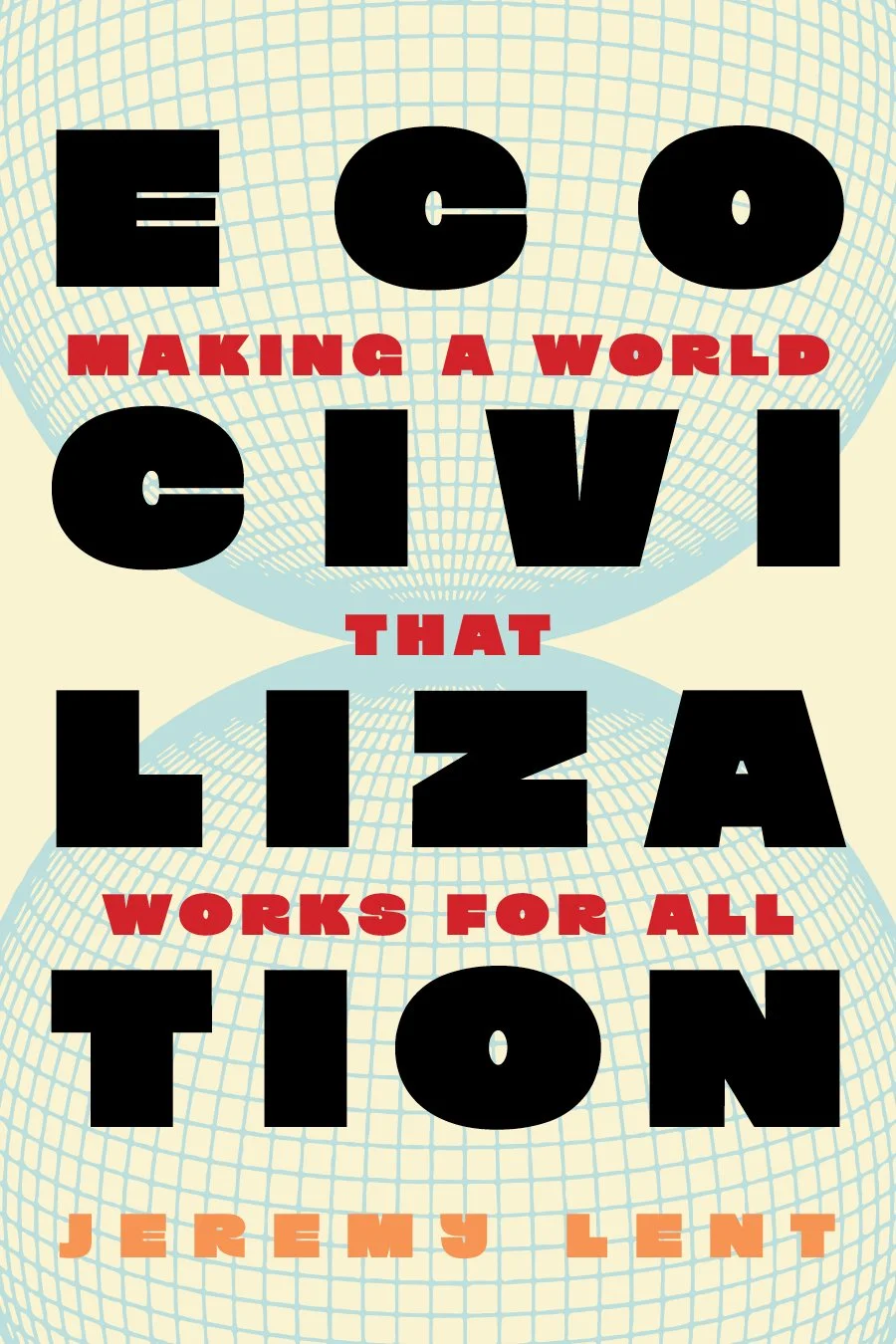
Book: Eco-Civilization: Making a World That Works for All by Jeremy Lent
UN Live: Are you hopeful?
Jeremy: If we look at what is going on, at the increasing power of elites, the rise of AI catalyzing more elite empowerment, the sixth great extinction, climate breakdown getting worse—it's easy to say we're headed for either total collapse or an authoritarian surveillance world. If it's a matter of putting probabilities on things, that's not a source of true hopefulness.
But where I do have hope is from recognizing that we live in a nonlinear world. Complex systems are inherently unpredictable. Not only that, but we as people in these systems are not separate from them—we influence how they are.
Once you realize this, you think about hope differently. It's not putting bets on which will win, but more recognizing Václav Havel's wonderful quote: hope is not an anticipation of a future event, but a deep orientation of the human soul. It's recognizing here we are as life in the midst of life.
What we do control is where we put our own attention and care today, tomorrow, and what we do with others to influence what's going on. When enough of us work on this together, it leads to the possibility of transformation towards that life-affirming future.
The one thing we can be sure about is that this century we're experiencing one of the greatest transformations in human experience since humans first evolved. We don't know what it's going to be. That's where the hope is—this notion of glimmers of light. As things get darker, and they are getting darker, to pretend otherwise is "hopium"—false hope with nothing to do with reality.
But as things get darker, imagine little glimmers of light at the end of the tunnel. Those glimmers, barely visible in the twilight, become clearer and clearer as things get darker—what is actually possible to move towards. All of us who see what's going on, who care about the future of life and human flourishing, are driven to move toward that light and brighten it with the work we do right now.
We extend our sincere gratitude to Jeremy Lent for sharing his reflections and insights with us, guiding the conversation on how we can recognize the worldview we've been swimming in, reimagine our relationship to life itself, and move together toward the glimmers of light that point to a life-affirming future.
Learn more about Jeremy's work:
Book: Eco-Civilization: Making a World That Works for All
Website: ecociv.org (Ecocivilization Coalition)