
Priya's Shakti
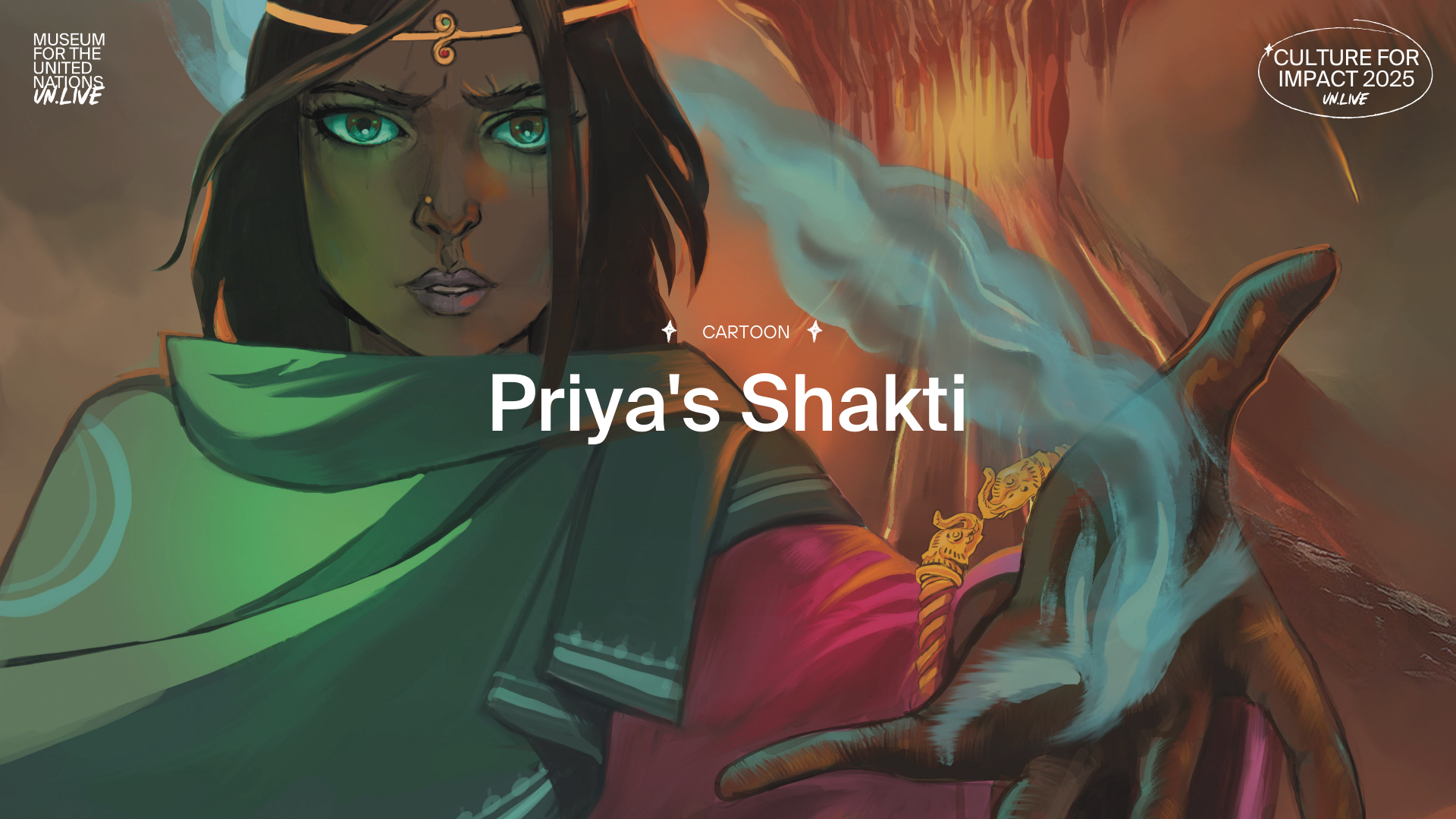
Every great initiative starts with a purpose. Can you share what your initiative does, the communities you serve, and why this work matters in today's world?
"Priya's Shakti" augmented reality comic book series came after the horrific gang rape that happened on a bus in New Delhi in 2012. There was an enormous outcry, in particular from young adults and teenagers. Deep-rooted patriarchal views needed to be challenged. As a result, we created India's first female comic book superhero—Priya, who is a rape survivor and through the power of persuasion is able to motivate people to change. The series has over 26 million readers worldwide, 2,000 news stories, and was named "gender equality champion" by UN Women.
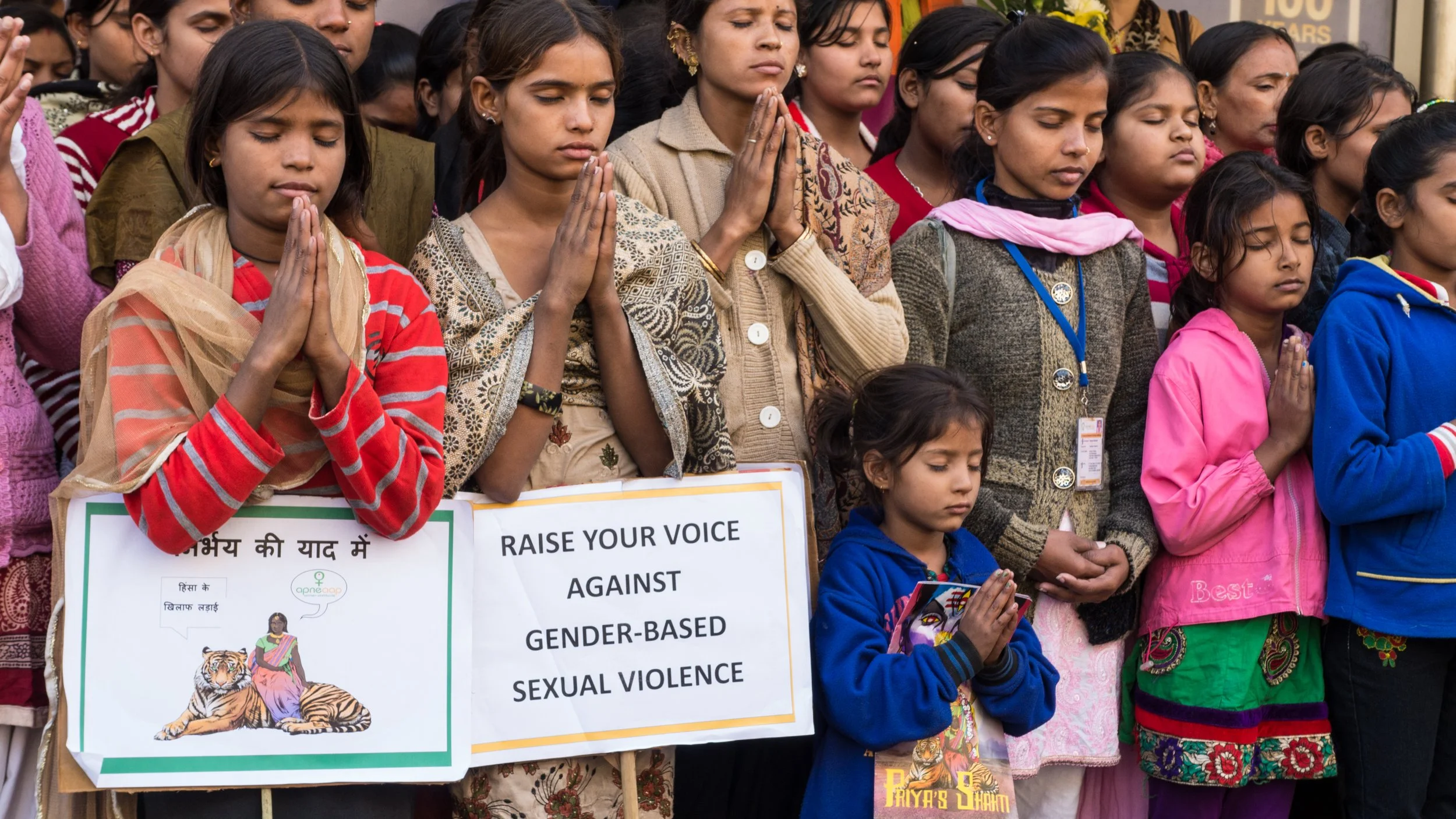
Photo: PRIYA Street Art
We're thrilled to learn more about your work. What does being featured on the 2025 Culture for Impact List mean to you and your initiative? How do you see this recognition supporting your mission or amplifying your impact?
I have a close relationship with the United Nations since I live only a few blocks away from the UN building in New York City. The first cultural program that I organized at the UN was for the "Year of Dialogue Among Civilizations" in March 2001. So, being a part of the 2025 Culture for Impact List is very important because the motivation of the comic book series is to address sexual violence in India and around the world. The comic book shatters the taboos around gender-based violence through art, education, and a strong, identifiable female character who is a rape survivor and superhero. Being recognized for creating Priya will help us to create more female superhero characters and stories from different cultures and other parts of the world—a universe called SUPER SHEROES.
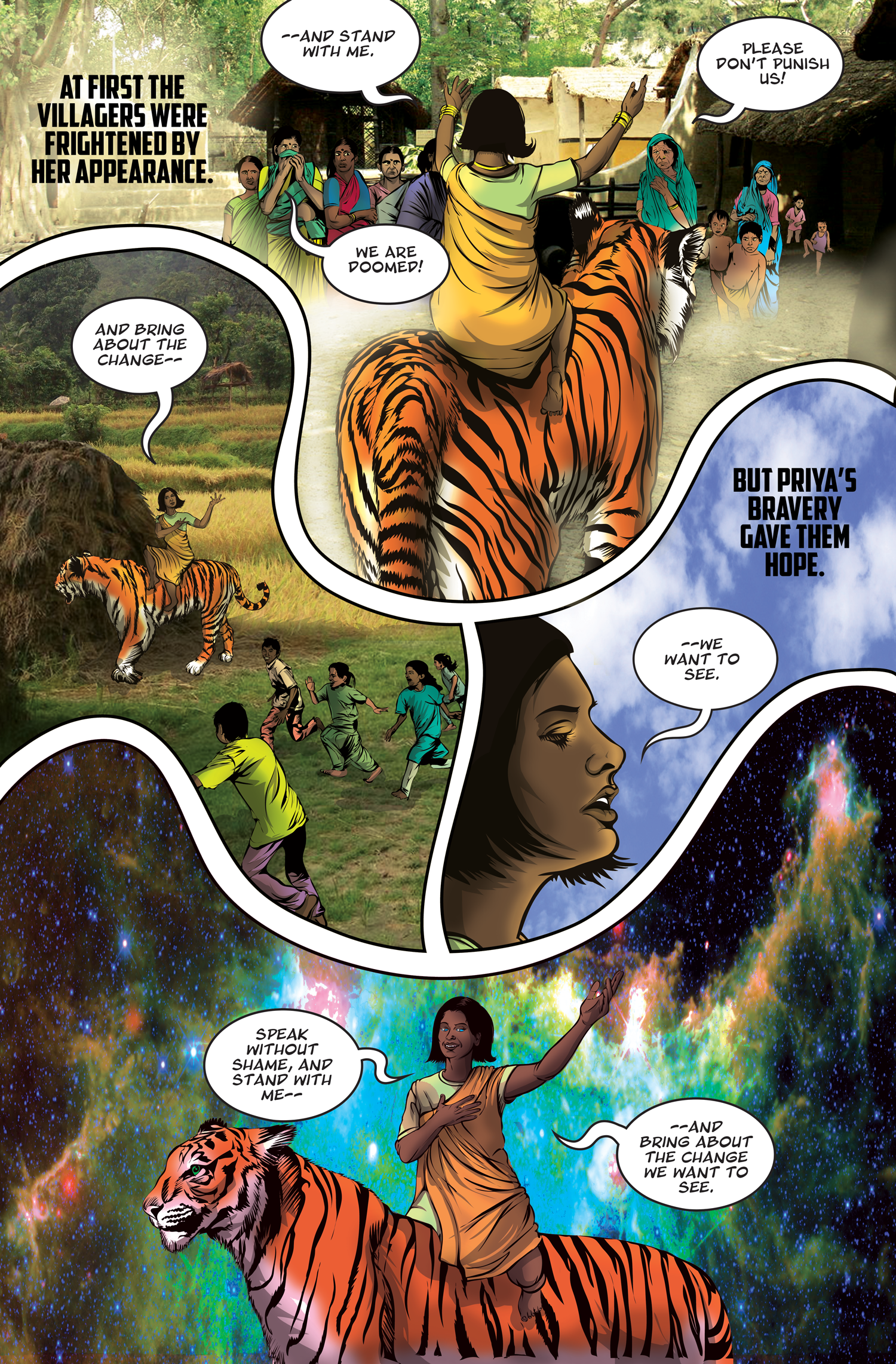
Photo: PRIYA Shakti Comic Page
Let's talk about hope. In your view, what role do arts and culture play in helping people reconnect with a sense of collective possibility? How can creativity and cultural expression encourage communities to imagine and work toward a better future together?
Art and culture is there to illuminate and persuade—this is what Priya does in the comic books. At the core of the story is conquering fear. At the end of the first comic book, "Priya's Shakti," Priya, the rape survivor, is thrown out of her village and is forced to live in the jungle. She is stalked by a tiger, which represents fear. One day she climbs down from the tree and looks the tiger in the eye and sings a powerful mantra given to her by the Goddess Parvati: "Speak without shame and stand with me and bring about the change you want to see."
Soon the tiger is transformed into her ally. Fear becomes Shakti, or power. She rides the tiger back into town and at first they are afraid of her because she is riding a tiger, but as they hear her mantra, the townspeople are transformed and join her in a movement to fight the cultural stigmas and patriarchy surrounding gender-based violence. This story is very much inspired by Mahatma Gandhi's famous "Salt Walk," which led to India's independence.
What inspired you to use socially engaged arts as a tool for positive change? How did this medium become your way of making a difference in the world?
The power of the comic book series is that it presents very difficult topics in an approachable and empathetic way. Readers can relate to the characters and story, and especially the main character—Priya—and understand the struggles that all survivors of gender-based violence endure. Creating a female superhero and using the genre of "superheroes" provides readers with a familiarity and accessibility to the comic book and these complex problems, and gives voice to survivors of gender-based violence. This is the power of art to reimagine a world and change it through storytelling.
What has the impact of your work looked like? We'd love to hear stories, feedback, or specific moments when you saw your initiative making a real difference in someone's life or in a community.
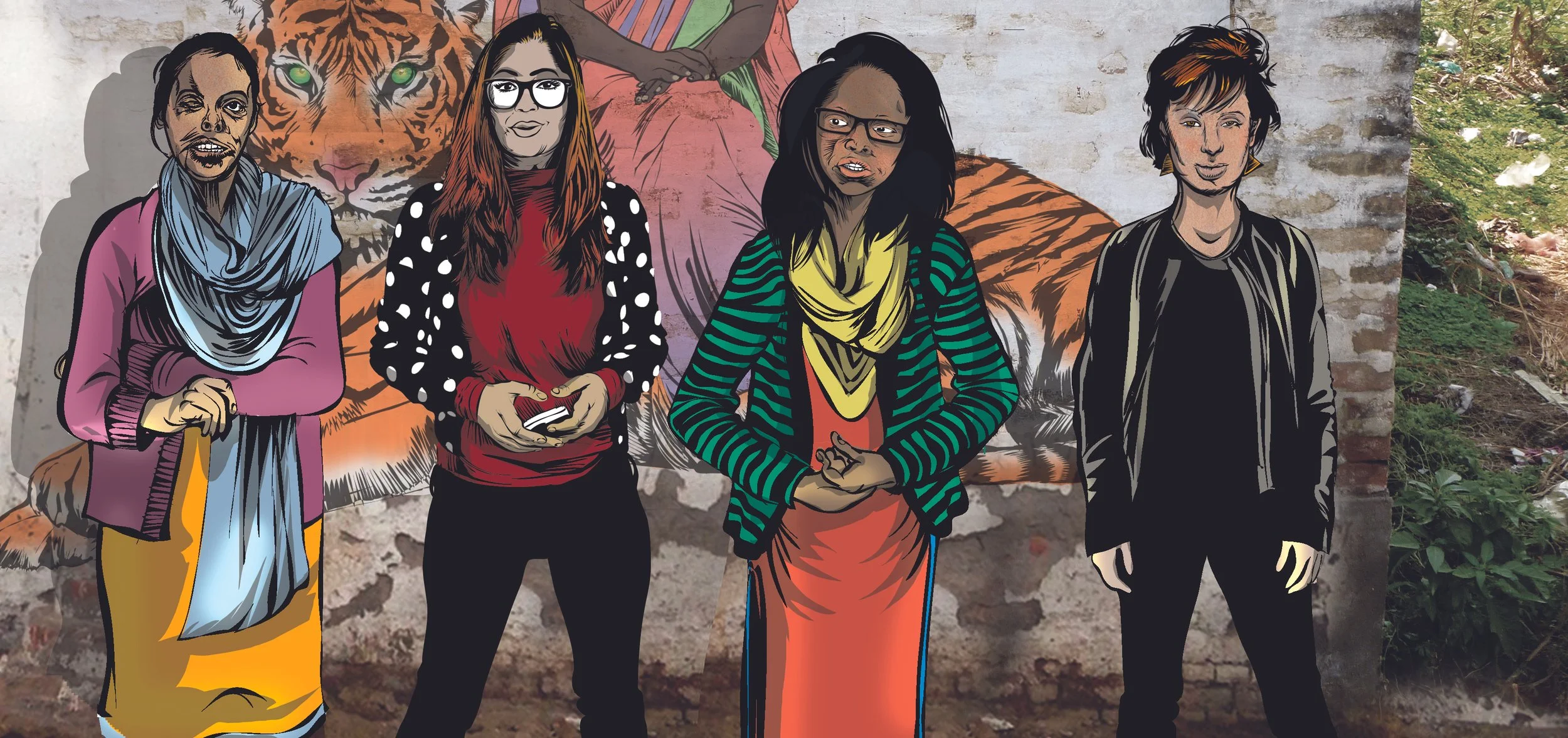
Photo: PRIYA Art Heroes
Some of the most powerful and memorable interactions I had were meeting and working with acid attack survivors on "Priya's Mirror." When I met Laxmi Agarwal in New Delhi, she told me about her story and I immediately realized that acid attack survivors faced the same cultural stigmas that rape survivors faced. Besides the emotional trauma that both survivors face, the physical violence of acid attacks is clearly apparent on their faces. Later I would meet with other survivors—Monica Singh in New York City and Natalia Ponce de León in Bogotá. With their support, I began creating "Priya's Mirror," which continues Priya's journey and interacts with acid attack survivors. When "Priya's Mirror" came out, the comic book brought worldwide attention to the problem of acid attacks in India and elsewhere. The problem was global and occurs in Colombia, the UK, and all over South East Asia, the Middle East, and Africa. Later, I created a separate comic book with Natalia Ponce de León called "Kaia." Natalia turned her tragedy into a national movement to tackle gender-based violence and change perceptions of women in Colombia.
What do you hope others can learn or take away from your initiative? Are there key approaches, values, or insights that you believe could inspire others to create change through culture?
I think the most important thing we want to emphasize with the comic book series is that change is possible. Trying to create a cultural shift is incredibly difficult, but not impossible. India is going through some remarkable and monumental changes in a short period of time. People's views have not caught up with the speed at which things are changing in India. But what was clear to me from the massive protests that happened all over India after the horrific rape on the bus in 2012 is that we want things to change in our country. There were so many teenagers and young adults at those protests, and they will be the future catalysts and leaders who will define India, which is a hopeful sign. Also, I want to make it clear that gender-based violence is not just a problem in India. Audiences around the world respond really well to Priya's story and message, so I know she has global appeal.
At UN Live, we aim to harness culture as a force for empathy and collective action. Looking at your work, how do you think popular culture platforms can inspire people — not only to care about the planet, but to take meaningful, connected, and concrete action?
In order for culture and art to create empathy and understanding, the work needs to provide agency. Both the artists and the audience need to have a stake in the work being created in order for them to care, or it will just be entertainment. When I created the comic book series, I interviewed and worked closely with survivors of gender-based violence. Often, they appeared as characters in the comic book and helped guide the story. The comic book became a tool for them to talk about what happened and how they transformed from victim to survivor to superhero.
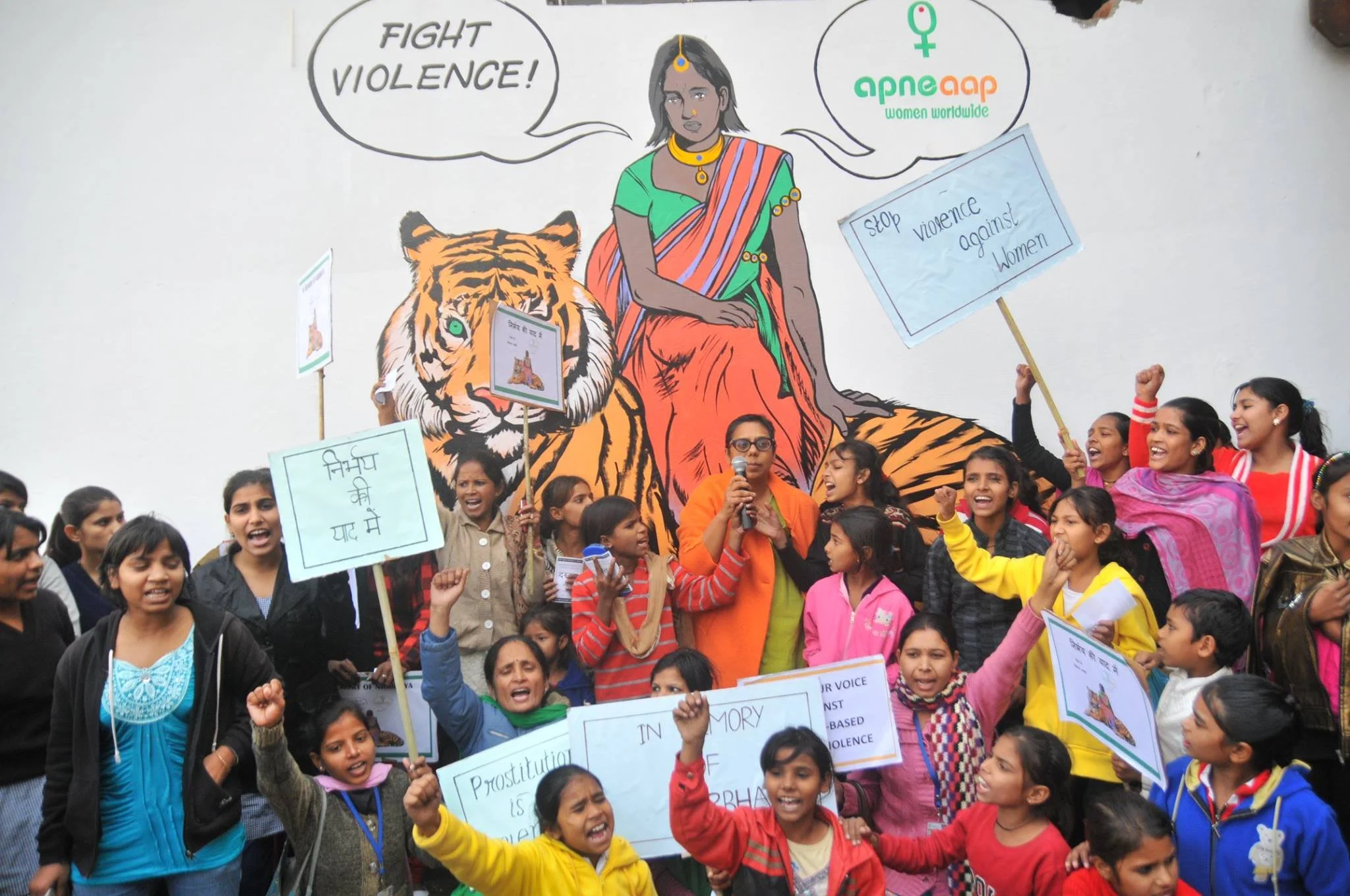
Photo: PRIYA Street Art